The Fire Within

Well, we are really into summer now, aren’t we?

Here in Central Texas, we have been experiencing our first set of continuous, 90-plus degree days along with humidity, pushing our heat index to 100-plus. Someone just told me it’s forecast to “feel like” 108 degrees this afternoon. Hot stuff!

This time of year, I do my Qigong and my walking or jogging first thing in the morning, to get ahead of the heat. I prefer to do my Qigong outside, in one of several special or “sacred” spots in my yard or in the woods behind us. The air is much fresher in the morning, in part due to the relative coolness, in part due to the respiration of the trees which is changing, so they are releasing more oxygen and thereby increasing the ionization in the air.

Anyways, back to summer. We started discussing the Five Elements (Wu Xing) a couple of months ago. We hit the highlights of the Spring element, Liver / Wood, and have been practicing our Liver / Wood exercise. It’s past time to dive into summer and begin practicing our Heart / Fire DaoYin. Here is some information on this element to help inform your practice.

Heart / Fire Element

According to Classical Chinese Medicine (CCM), the Heart is the Emperor of all the organs. All the other organs will sacrifice for the Heart, in other words they will give their energy to the Heart to help maintain its balance. The Heart’s associated yang organ is the Small Intestine.

The Heart is responsible for the circulation of blood as well as lymph. The Heart is also considered to be where the mind resides. So we refer to the “Heart-Mind” in this area, as it is a mental and emotional center. And when you think about it, this makes sense. We know that the Heart has its own nervous system which can function autonomously from the brain and provides information to the brain. We also know that the digestive system, particularly the small intestine, has its own brain, called the enteric nervous system.

Think about how you make decisions, either consciously or unconsciously – typically through a combination of analysis or rational thinking plus a gut feeling or impression. Hence the concept of the Heart – Mind working together.

Physical Aspects of the Heart

The Pericardium protects the Heart. In the Fire / Heart Wu Xing exercise, we work directly through the Pericardium meridian to pull healing energy into our Heart / Middle Dan Tien. We also explore an important healing point, the Laogong point (PC8), which is on our palms.

The tongue is the sensory organ related to the Heart. We use tongue diagnosis in Classical and Traditional Chinese Medicine and acupuncture.

The blood vessels are the tissue associated with the Heart. Because the face has many blood vessels, the complexion can reveal the state of the Heart. A pale complexion can indicate insufficient blood flow, an overly red face can indicate excessive heat or inflammation. As we have learned more about a lot of the chronic diseases that afflict our Western society, we have increased our focus on inflammation (or “heat” in CCM) as a common causal actor, including in heart disease and related conditions. 

Psycho-Emotional Aspects of Heart / Fire

Excessive joy and excitement are the negative emotions associated with the Heart. It’s taking the positive emotion of happiness or joy too far, so it’s like a manic type of feeling or energy. For example, someone with ADD or ADHD who might be super high energy, but also has trouble winding down or calming themselves so they can focus or sleep.

Excessive stress can negatively impact the Heart. As can the lack of self-expression or not being able to share. The heart’s associated organ is the tongue, which is evidence of the its close connection to language, creativity, self-expression, and sharing love.

Positive emotions associated with the Heart are happiness, joy, and love. These emotions can inspire us. They can also lead to a state of peacefulness.

Why is Summer associated with the Heart and Small Intestine? Fire generates light energy, and light is love. Without love, we would wither away from the inside out. Without passion, life would be joyless. And without self-love, we could never blossom into the fullness of all we are meant to be. Love, passion, and enthusiasm inspire creativity and self-expression.

If you’re interested in learning more about the Wu Xing Jing / Five Elements Health Form, click here. Discover the master blueprint for a powerful health practice!

An Easy Way to Nourish the Qi and Blood

When first learning Qigong, you focus quite a bit on relaxing, breathing, and learning the movements of various exercises.

Your initial task is to learn the correct form of each movement while staying relaxed. Then you learn to match the correct breathing pattern (“inhale here, exhale there”) with the movement. Once the movement and breathing become more automatic or “dialed in”, kinda like muscle memory, you can relax more fully and use intention to help improve your awareness of your internal energy, or qi (“chi”).

While we keep in mind the general pattern of energy flow associated with the movements, we never force or guide the energy. The body, in its innate wisdom, knows what to do and how the energy should flow. Instead, as a newer practitioner, you want to open your awareness of the energy centers (the Dan Tien) and the energy flowing within you. It’s often a subtle thing: you slowly become aware of the flow, the feeling of tingling, or heat, or of a heavy, almost magnetic liquid. You may begin to feel a more powerful connection between your hands when you play with your energy ball (or energy pearl). And you begin to feel not only heat, but also movement in your lower dan tien during your standing practice.

These manifestations of Qi are welcome events. But don’t become stuck on them. Enjoy the sensation, be proud of your progress, but don’t dwell on the feeling. Keep practicing and learning, keep relaxing and opening, allow your focus and intention to grow. Be mindful during your practice; gently focus on what you are doing. Your ability to simultaneously relax and focus is one of your most powerful tools in Qigong – AND in life.

Activating Points

With our qigong, we seek to promote the flow of energy through the meridians, or energy pathways. Maintaining this free flow and eliminating any blockages is especially important. However, we sometimes focus on a specific point to help increase the results we can achieve from a particular movement. Or we press or tap on specific points to help balance or regulate their corresponding organ or energy center. Point manipulation should be an important part of your health and wellness practice. This is why we often end our Qigong classes or sessions with some seated work, during which we tap or rub along our meridians and rub specific points.

One of the best points to start out with is the Zusanli, or Stomach 36 (ST36), point. This point is below the knee along the Stomach meridian (see image below). The best way to locate it is to place your four fingers just below and to the outside of your knee cap. Just below your little finger will be the correct level of the point. Then move laterally so you are to the outside of the tibia (shinbone). You should find a small depression in the leg where the point is located (in between the crest of the tibia and the tibialis muscle). Feel around a little, pressing with your thumb or finger, until you get a sense of the point’s location.

ST 36 has a nourishing effect on the Qi and the blood. It’s a commonly used point and a great one to start out with, as it will not have a detrimental effect on any internal condition you may have. You can activate it by massaging or pressing on it with your thumb. Find and rub the point on one leg, then the other. Once you have the feel of the point on each leg, stand up and assume your Wu Ji posture, which we use for standing qigong and meditation.

Once in Wu Ji, bring your awareness down to the ST 36 point in each leg. Use your awareness to activate each point. Breathe into and out of the point. Specifically, focus on your exhale as you maintain intention on the point. After a few minutes, you should start to become aware of an increasing pressure in the area of your ST 36 point. The point may become warm, and you may start to feel energy or tingling. As you continue to keep your awareness at the point and lead your breath, you will move energy into the Stomach meridian.

If you continue, you may feel warmth and tingling move out along the meridian. This is a sign that the Qi and blood have been stimulated. Enjoy the feeling for a few more minutes. If you don’t feel anything, don’t worry about it. It may take a few attempts of finding and pressing or rubbing the point to get the feeling…focusing your awareness and breathing on it…then beginning to feel some pressure or warmth. As long as you are following these steps, you are engaging in a nourishing practice with wonderful benefits to your energy and wellbeing.

Why is the Zusanli point so powerful and nourishing? Why is it one of the key points that Medical Qigong / Classical Chinese Medical doctors have traditionally focused on and worked with, since ancient times? We’ll discuss this and more in our next post.

Resilient Edge Wellness Featured by the North Lake Travis Chamber of Commerce

I was delighted to be interviewed and featured in a recent BizBuzz video published by the North Lake Travis Chamber of Commerce. Our Chamber is based in Lago Vista and does excellent work within the communities of Lago Vista, Jonestown, and Point Venture. These towns are little gems located on Lake Travis in the beautiful Texas Hill Country, and just a short ride from Austin.

Local BizBuzz: Resilient Edge Wellness

The current episode of Biz Buzz takes the NLT President, Tim McClellan, to the office of Resilient Edge Wellness. Dr. Karen Van Ness (DMQ,DCEM,CPT, MS) specializes in Medical Qigong (pronounced chee-gong). Tim will take you on a quick visit with Dr. Van Ness to learn more about the traditional aspects of this ancient medical system now available on the North Shore. Used as both alternative and complementary to Western medicine, there is a lot to learn about this fascinating practice. (Click on the image to view the video.)

Visit us at our website to learn more, download our most popular special report, or schedule a free, 30 minute consultation.

Resilient Edge Wellness

7400 Lohman Ford Rd Suite E

Lago Vista, TX 78645

Ph. 512-267-3915

info@resilientedgewellness.com

www.ResilientEdgeWellness.com

An Important Storage Spot for Emotional Energy

In previous posts, we’ve discussed the Five Element Framework of Classical Chinese Medicine and applied it specifically to the current season, Spring, and its associated element and organ, Wood / Liver.

Let’s get into some of the emotional and energetic manifestations of the Liver.

The Wood element energy is defined as “New Yang”, manifesting through new beginnings and expansive and sprouting growth actions. It therefore represents a period of energetic growth and expansion. Hence, its association with Spring and the growth and expansive energies we see, feel, and hear all around us as plants and flowers sprout up from the ground, trees begin to leaf up, birds and critters begin to pair up and nest, and the daylight hours grow longer.

Liver energy is a rising energy. We can feel it thrust upwards in our body when we perform our Liver DaoYin exercise. In the exercise, we guide the energy up with our hands, then guide the energy back down so we stay grounded and rooted.

From an emotional aspect, the energy of the Wood element corresponds to what the Daoists call the Hun or Soul of each person. This theory holds that the Liver encodes all our memories and emotional content and, in a sense, writes or records this onto the “CD” or “tape” of each person’s life. This then becomes the record of our life that we take with us when we transition. In a sense, this corresponds with the concept of our subconscious which takes in everything that happens to us and serves as a repository of memories and emotional content. This is one reason we focus on the Liver as part of assessing and working with individuals who may have suffered from trauma.

Here’s the good news: we are not stuck with the initial recording that has been laid down in our Hun. As we mature, move away in time from the traumatic incident, learn, and grow, we can go back, either consciously or unconsciously, and process and modify the memories and emotional content. We can go back and change the story or reframe what happened to us. We take the lesson we can learn, the motivation to do or be different or better. We welcome the perspective and even wisdom we can derive from the experiences that come with living a full life.

The Liver / Wood element is associated with compassion, patience, and kindness. These are the virtues we are born with. When our Liver is in balance, we manifest these virtues in the world. When our Liver is out of balance, we may experience anger or frustration, impatience, or rage.

Therefore, treatment of the Liver often includes purging to help eliminate the toxicity that has built up. We can do this through energetic treatments; through specific types of qigong exercises; and even through simple things like drinking lemon water.

The Liver is responsible for the smooth flow of blood (and therefore Qi). When we purge and release stagnation, we not only enhance the patient’s physical health, but we also release excess anger that has built up. We can then regulate and balance the Liver’s energy, allowing benevolence, compassion, and love for others to radiate from the Liver.

As we approach Easter, it seems appropriate to do our part to send out more benevolence, love, and compassion, doesn’t it?

Let That Shit Go (It’s Good for You)

Let’s apply the Five Element Framework specifically to the current season, Spring, and its associated element and organ, Wood / Liver. What are the physical and emotional health aspects of Liver? And how can you support your Liver and overall health, especially now that Spring Has Sprung?

According to Classical Chinese Medicine, the Liver is the organ responsible for the smooth flow of emotions as well as the smooth flow of Qi and blood in your body. It controls the volume and smooth flow of blood in your vessels and stores the blood. It’s the organ that is most affected by excess stress or emotions. The Liver’s partner organ is the Gallbladder.

The eyes are the sensory organ related to the Liver. If you have any eye issues, including blurry vision, red or dry eyes, itchy eyes, it may be a sign deep down that your Liver is not functioning smoothly. Also, we often consider the brightness in someone’s eyes as an indicator of their overall health and vitality.

The tendons are the tissue associated with the Liver. In Chinese martial arts, they say that strength comes from the tendons, not the muscles. We also focus on tendon and ligament strength and suppleness in our qigong practice.

Anger is the emotion associated with the Liver. If you are often irritable, get angry easily, have trouble unwinding from the day’s activities, have trouble reasoning or going with the flow and letting things go, you are experiencing a Liver function problem. Experiencing these emotions chronically or excessively, such as ongoing frustration, can seriously unbalance the function of your Liver.

Positive attributes associated with the Liver are drive and determination. Think about the “drive”, the “will to life” we see every spring as the tiniest shoots of plants or grass or trees push up through the soil, or even through rocks or cracks in the concrete. In human terms, this corresponds to the person who has will power to overcome challenges and even create new things.

Spring is the season associated with the Liver and Gallbladder. It’s the season of growth and renewed energy, so it’s a wonderful time to work on your Liver. Just don’t get too caught up in the spring’s intense energies. Taking walks in the park or the woods is a fantastic way to rejuvenate. As I said above, the Liver is the organ most affected by excess stress or emotions. So let go of the stress and any anger (see my Buddha T-shirt for one of my favorite phrases…). Also, purging exercises, such as the Five Elements Dao Yin Exercise you can learn here, are a fantastic way to detox your liver.

One thing to also be careful about is to watch the alcohol. If you drink, drink in moderation because alcohol has a direct impact on your liver. Being a beer and wine drinker myself, I hate to have to pass that along, but… a drink or two here or there is not a problem. But if you feel like your Liver may need some TLC, lay off for several weeks and see how you feel.

In my next post, I’ll explore more of the psychological, emotional, and spiritual aspects associated with Liver and Gallbladder.

The Five Elements Framework and How It Can Improve Your Health

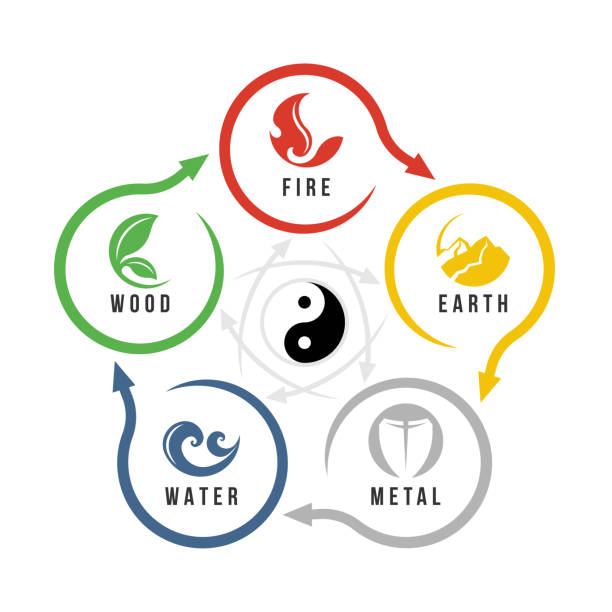
The Five Element Framework is ancient and deeply woven into the fabric of Chinese culture. Five Element theory is the foundation of Chinese disciplines such as feng shui, the martial arts, and the I Ching (The Book of Changes); and it provides a comprehensive template that organizes all natural phenomena into five master groups or patterns or phases in nature: Wood, Fire, Earth, Metal, and Water.

From a health enhancement and medical perspective, the Five Element Framework provides a master blueprint that diagrams how nature interacts with the body and how the different dimensions of our being impact each other, as well as a diagnostic framework to recognize where imbalances in the body, mind, emotions, and spirit lie.

The Five Elements include the five Yin organs – Lung, Kidney, Liver, Heart, Spleen (and their corresponding Yang organs: Large Intestine, Bladder, Gall Bladder, Small Intestine, and Stomach respectively) – and address the interconnected relationships between them. Within Medical Qigong and Classical Chinese Medicine, we can treat disease and illness – and sometimes even acute issues such as pain – associated with each organ (or organ system) through specific energetic treatments, exercises, and food or supplement recommendations.

As a Medical Qigong practitioner, I often teach my patients a special set of exercises called the Wu Xing Jing, or Five Elements Health Form. Each exercise in the Five Elements Form is targeted to a specific organ system and helps to support, regulate, and balance that organ.

The version of the Wu Xing Jing I usually teach is actually a Dao Yin form. Dao Yin exercises are about how you can stretch and make the body become supple through therapeutic awareness of the movements as you are doing them. They are very similar to Qigong exercises; however they were developed thousands of years ago and are thought to be precursors to Qigong. Certain Dao Yin forms have come down to us from ancient times and are still practiced today, although they may not be as well-known and therefore not as widely taught as Qigong.

These exercises work through the principle of Yin and Yang, in that when something reaches its extreme, it’s going to take on its counterpart. When something becomes too Yang, it becomes Yin, and vice versa. Through these exercises you are taking something to the state of full contraction or extension, then returning it back to its opposite. This has physiological benefits, helps move the Qi or internal energy to where it’s needed (or moves it away from where it is excessive), helps heal or maintain health of the organs, and opens up the energy pathways of the body.

By the way, if you are interested in learning more about the Five Elements / Wu Xing Jing Dao Yin Form, click here.

In my next post, I’ll explain how we apply the Five Element Framework specifically to the current season, Spring, and its associated element and organ, Wood / Liver. We’ll discuss the physical and emotional health aspects of Liver and how best to support your Liver and overall health, especially now that Spring Has Sprung!

Restore Your Connection

One of the most fundamental aspects of practicing Qigong, as well as working with patients within the Medical Qigong paradigm, is Grounding.

Grounding is the ability to fully connect with the Yin energy of the earth. Through a simple grounding meditation, we center and relax, connect, and allow ourselves to feel the warm, comforting embrace of Mother Earth’s energy. When you are grounded, you feel a sense of stability, of being safe, secure and protected, and of being whole.

An interesting aspect of grounding is that we are connecting through our lower dan tien or energy center, which is in the middle of the lower abdomen. This is our physical center of gravity, our center. It is also related to our essential essence or “Jing”, the life force or vital energy that we are born with. When we ground, we automatically support and enhance our Jing. But we are also connecting with our spiritual side, albeit in a subtler way. When we ground, the energy moves from our lower dan tien, through our root or base (Huiyin point at the perineum), and then up through our heart center and all the way to the crown of our head – the Baihui point, which is analogous to the crown chakra in yoga.

Hence, the feeling of wholeness we enjoy when we are fully grounded is not just physical wholeness or stability, it is also mental and emotional wholeness and stability. In our paradigm, body (physical), heart/mind (emotional and mental), and spirit (higher consciousness) are inextricably connected. When we give ourselves the gift of grounding, we impact our entire being.

When mind, heart and body are in synch, you are grounded. Some wonderful manifestations or signs of being grounded include:

-You feel safe.

-You feel present – your mind is focused on the here and now, not drifting to the past or worried about the future.

-You feel comfortable in your own body.

-Your biorhythms, such as heartbeat, breathing, and blood pressure are entrained, stable, and slower.

-Your personality manifests as someone who is stable, reliable, and down-to-earth.

Unfortunately, our modern lives have caused most of us to lose touch with Mother Earth, to lose this connection. We spend more time inside…we are on our screens much of the time…we don’t walk around barefoot like we did as kids.

Simple But Powerful

One of the first things I teach a new patient – and one of the first exercises I teach in my Qigong courses and classes – is a simple grounding meditation. This exercise is powerful. Restoring the connection to the earth can result in dramatic changes and experiences.

A key to grounding is simple awareness. Through your breathing and gentle intention, you relax, center, and get calm inside. This helps open the channel to the earth’s energy.

Another key is to have a direct connection to the ground. Whenever possible, go outside and stand (or sit) with your bare feet solidly on the ground. Or you can sit on the ground with the bottoms of your feet and the palms of your hands touching the ground. If it’s cold out, wear socks or moccasins that don’t have a rubber or synthetic bottom.

A third key is to center your intention gently into your lower abdomen. Breathe in and out of this area. Allow your breath to become longer and fuller. But don’t strain or push. Just gently breathe in and out through your nose (which helps you relax) and be open to the connection with Mother Earth.

I teach an effective (and fun) grounding meditation and have included it in one of my courses, Breathing and Qigong for Health and Energy (click here for more information). This course provides the foundation for a wonderful, effective, and fun Qigong and Breathing practice. It’s taught in a short four weeks and will introduce you to a proven health and energy cultivation method impacting body, mind, and spirit, which hopefully becomes an ongoing, consistent practice you will enjoy and benefit from.

I’ll have more to say about Grounding and its impact on our physical, mental, and emotional health in future posts. In the meantime, give yourself the gift of breathing. And add the power of “plugging in” to Mother Earth through grounding.

You Can Do It!

Be Like the Winter Buddha

“Winter is Coming?” No, Winter Is Here!

Finally, here in Central Texas, we’re experiencing winter weather. Ice, freezing rain, temps in the 30s and 20s. Not much snow, though.

So far it has been a very mild winter for us. When I have my Qigong classes perform exercises to support the Kidney organ system, as we do in Winter, it feels a little funny. However, it’s important that we follow the seasonality inherent in the Five Elements, or Five Elemental Phases, which help support our health AND the prevention of illness or disease.

If you’re not familiar with the Five Element Framework, here’s some background:

The Five Element Framework is ancient and deeply woven into the fabric of Chinese culture. Five Element theory is the foundation of Chinese disciplines such as feng shui, the martial arts, and the I Ching (The Book of Changes); and it provides a comprehensive template that organizes all natural phenomena into five master groups or patterns or phases in nature: Wood, Fire, Earth, Metal, and Water. From a health enhancement and medical perspective, the Five Element Framework provides a master blueprint that diagrams how nature interacts with the body and how the different dimensions of our being impact each other, as well as a diagnostic framework to recognize where imbalances in the body, mind, emotions, and spirit lie.

The Five Elements align with the five Yin organs (and their corresponding Yang organs) as well as with the seasons, as follows:

-METAL ELEMENT: Lung (Large Intestine), Fall

-WATER ELEMENT: Kidney (Bladder), Winter

-WOOD ELEMENT: Liver (Gall Bladder), Spring

-FIRE ELEMENT: Heart (Small Intestine), Summer (Heart also includes the Pericardium and Triple Warmer)

-EARTH ELEMENT: Spleen (Stomach), Late Summer (Spleen also includes the pancreas)

In our Qigong classes, we practice exercises from an ancient set of Dao Yin exercises (the Wu Xing Jing) which are similar to Qigong exercises. However, they were developed thousands of years ago and are thought to be precursors to Qigong. Certain Dao Yin forms have come down to us from ancient times and are still practiced today, although they may not be as well-known and therefore not taught as widely as Qigong. There is a specific exercise for each of the Yin organs (which therefore also benefits its Yang organ pair). The exercises have physiological benefits and help move internal energy to where it’s needed (or move it away from where it is excessive), help heal or maintain health of the organs, and open the energy pathways of the body. The movements of each exercise stimulate blood and lymphatic flow in a controlled and gentle manner. They bring vitality into the body and help keep us feeling vibrant and healthy.

The Kidney is the repository of our “Jing”, or pre-natal qi or essence. We are each born with a finite amount of Jing and it’s important to safeguard this precious resource. It is the reserve generator of energy in the body and supplies extra Qi to the other organs when necessary.  From a western medical perspective, Jing Qi relates to our cellular DNA and our body’s hormonal reserves that support healthy aging.

The Kidney corresponds to a complex system of organs and structures including the reproductive system, the adrenal glands, the ears, the bones, and the brain.

Fear is the emotion associated with the Kidney. If you often have severe panic attacks, anxiety, and fear, or you’re just afraid to make a decision or go for something, or feel like you lack willpower — your Kidney energy may be running low or be imbalanced.

Balance and harmony in the Kidney manifests as courage or confidence, strong willpower and endurance or persistence. We can draw upon wisdom and our inner knowing to overcome our fears.

Winter is the season associated with the Kidney and its partner organ, the Bladder. During this season, we include specific exercises which focus on our Kidneys when performing our Qigong. We also eat foods that support the Kidneys, as well as adopt a slower pace. In fact, during winter, it’s important to slow down, conserve energy, sleep longer – in other words, go with nature and “hibernate’, renew, and get more rest.

So follow the example of the “Winter Buddha” (see above photo). It’s snowing, it’s cold, yet the Buddha maintains an impervious, quiescent state. But don’t let the apparent stillness or lack of activity fool you! Inside, Jing / Vital Energy is being replenished, old fears are being worked out and transformed, and the important systems such as the central nervous system (brain and spine), bones and marrow, and important hormones, are rebuilding.

This quiescent cycle will help restore your energy and reserves so you are ready to burst forth in the spring.

To learn more about the Five Elements DaoYin (Wu Xing Jing) including the full set of exercises, click here. Discover the master blueprint to a powerful health practice – in 6 short weeks!

Forget About Resolutions. Do This Instead

Each New Year can feel like a new beginning. This man-made structure of the calendar, with its ritual ending of one year and beginning of another, serves most of us as a cue to take stock and reflect on the past 12 months…and think about what we want to manifest in the coming 12 months.

Many people make a New Year’s resolution – or multiple resolutions – at the beginning of each year. The expectation and potential of the new year combines with the reality that we came up short the previous year and propels us to think optimistically. “This year I will do it! This will be my year! This time I will stick to my diet / fitness program / new work habits / stop procrastinating / stop yelling at my kids” etc. etc.

Typically, these resolutions involve things we want to change about our lives in the coming year. Many folks start out strong. Unfortunately, as studies (and our own experience) have shown, most people drop their resolutions by about mid-February. In fact, it’s a truism in the fitness world that most gyms make their money on the people who sign up in late December or early January. The gyms are super crowded during the first four to six weeks of each new year, frustrating the regular gym-goers who now must compete with the newbies for the equipment or the spot in the group fitness class. However, by mid-February, the gyms are noticeably less crowded. Most of the newbies have stopped coming or come only occasionally. The regulars get back to their own routine and can snag the fitness class spot or piece of equipment they want with no problem.

If resolutions don’t work so well, what is a solution? What’s an alternative that works?

I encourage you to switch from making resolutions to setting intentions. An intention is a directed impulse of consciousness that contains the idea, the form of what you wish to create. Based on quantum physics, it is thought that each of our ideas or intentions broadcast out into the quantum realm of possibility, like the ripples or waves on the surface of the water that emanate out in all directions from the rock that you throw into the pond. Those waves of possibility move out to the future, charting a potential path for manifesting the reality of the intention into your life.

Some waves “bounce back” to us in the form of a material change in our lives. How successfully we manifest our intention depends on the strength of the wave we send out. The strength of the wave – whether a small ripple, a large surfing wave, or a tsunami – depends on two things: (1) How definite and clear our intention is – in other words, we have a clear, well-defined purpose or achievement or way of being; and (2) how much desire or emotion we have invested into that intention.

The wonderful thing about intentions is that they are not tied to the calendar. You may have an overall intention of getting into better shape, or feeling more energetic, or finally achieving a goal that has eluded you. And that’s great! Define it clearly AND allow the feeling associated with the intention to wash over you. Get enthusiastic about it. Feel as if you have already achieved it, or it has already come to you or happened to you. Bathe in that feeling and that vision regularly.

At the same time, set smaller intentions for each day that help support or feed into your larger intention. This is akin to setting “process” goals – or things you will do daily, weekly, or monthly, on a consistent basis – that help you accomplish your more substantial goals. When you link your bigger intentions to your daily activities, you keep that intention front and center. Each time you complete a task or smaller goal that supports a larger intention, you send out additional waves into the realm of possibility, further strengthening the probability that your intention will come true.

To have a momentous year, you don’t have to” set the world on fire”. You don’t need “massive action”. You simply need to go inside, take stock, consider what you really want – the thing or things with the most meaning to you – set the intention, and imbue it with feeling. Then set your supporting intentions and take the small, daily, consistent steps each day to help bring to fruition that which you wish to manifest in your life.

You Can Do It!

New Year. New Body. New Life

Happy New Year!

The New Year provides an annual milestone and impetus to improve in the areas of your life that you are not satisfied with. It also provides a nice starting point for pushing to greater heights in those areas that are going well.

Despite the most heartfelt resolutions, many people don’t get off to a fresh start in the New year because they allow themselves to remain mired in the past. Past failures, past shortcomings, past heartbreaks. It’s easy to hold on to these and assume they are indicators of what the future holds.

It’s important to free yourself from the internal binds to the past. What happened in the past year, or in previous years, HAS happened. It is gone. Learn from your experiences, yes! But don’t let what has happened in the past – good or bad – prevent you from crafting the best possible now – and future now’s – for your life.

In the spirit of the Fresh Start, here are some thoughts to help you break loose and think with freedom, feel with optimism, and move with a light and joyful step through the coming year.

At a physical level, you are a BRAND NEW person. By the time you read this sentence, 100,000 cells in your body will have died and been replaced! Your entire body – all the tissues and structures – regenerates itself every 6 months. You are constantly dying and regenerating at the cellular, indeed the molecular level. Every new day brings new growth.

Whatever trauma, heartache or so-called failure that happened last year happened to the old you – the you that existed then. But why is it that we so often remain captive to the emotional hurts and bad habits of the past? Mentally and emotionally, we remain tethered by guilt, shame, and blame. When we should be following the lead of our physical selves and – let go.

The Bible says, “You are wonderfully and powerfully made.” You are a completely new you. You are wiser, more powerful, more capable. You are a survivor. So don’t remain chained to the emotional or physical hurts of the past. A new you greets this year. A future new you will finish this year. Let’s kick it off in fine fashion!

You Can Do It!

Karen