Digest the Gristle: The Earth / Spleen Element and Transformation

We’re moving more fully into Fall now, so let’s complete our discussion of the Late Summer / Earth Element by discussing aspects of Earth / Spleen energetics and the emotional, mental, and spiritual aspects of transformation.

Just as we digest, assimilate, and obtain nourishment through the Stomach and Spleen organ system for our physical bodies, so do we digest and assimilate our experiences, whether good, neutral, challenging, or even traumatic. When our Spleen / Stomach energies are balanced and regulated, we can “digest the gristle” – that is, take from the experience the lessons learned, the “nourishment” to help us grow and get better, the impetus towards the transformation that may be required based on our new knowledge. And we also eliminate that which does not serve or help us.

If we are out of balance – for example, if we are living in a stressed-out state of mind and being or suffering from a chronic health condition – we may have difficulty assimilating nourishment from our challenges. We may embrace lessons that contract or constrict our world view, rather than expand it. We may lack confidence to move forward in life. We may find ourselves unable to trust – we don’t trust other people, and we don’t trust our own gut or intuition. We lose faith in ourselves and our ability to move forward.

In Classical Chinese Medicine (CCM), the Spleen (Yin organ) and Stomach (its Yang organ pair) are intimately connected. The Stomach receives nourishment and begins the digestive process; the Spleen transforms this nourishment into Qi / energy and blood, and then transports the Qi and blood throughout the body. Stomach and Spleen create a dynamic balance between giving and receiving.

The key qualities of the Earth element are nourishment and stability. When our Earth element is balanced and stable, we easily transform food into nourishment and experiences into lessons-learned and growth. We feel well-nourished and grounded within our body. Our Earth energy provides the stable platform from which to trust ourselves, our gut, our intuition. And we can attend to others, giving support, encouragement, and nurturing.

When our Earth element is out of balance, we are unable to transform or assimilate food or experiences. We feel unstable and ungrounded. Our mind may go around and around in an endless cycle of excessive rumination. This can include rumination and overthinking about something that just happened, so we can’t digest and learn from it. This can also include obsessing or excessive worry about an event (either real or imagined) yet to come.

As a result, we never get off the dime. Our natural Yi or intention, also associated with the Spleen / Stomach, becomes weak. Our Yi influences our capacity for thinking, concentrating, and studying. It helps us think through our life experiences. If our Yi is weak or unbalanced, we won’t learn our lessons, and we may make the same mistakes, over and over again. We also lose motivation and become less resilient.

Earth’s Connection to Our North Star

Within Daoist teachings, the Earth element is associated with the North Star. How so? Well, first, visualize yourself standing on the stable, solid earth under your feet – this is the grounded state of trusting yourself. Then form a triangle with the thumb and forefinger of each hand and raise your arms straight up above you. Now look up through the triangle to the North Star. Set your ultimate goals, your intention (or Yi) square within your sights. Your “True North” helps guide you through life, through the challenges, the lessons learned, the detours. As long as you can stay grounded and have a place to stand, you can figure out a way through.

Or, as Casey Kasem used to say, “Keep your feet on the ground and keep looking at the stars”.

So, you see how important the Earth / Spleen element is to our growth and transformation. Its key virtue is Trust: trust in ourselves, as well as our ability to trust in others.

Trusting oneself to learn, to grow, to be able to handle new situations and challenges. Going deep inside and listening to what our gut is telling us (i.e., the enteric nervous system which has more neurons than the brain). Using this as the stable ground from which we set our intention and purpose and move forward in life. Good stuff!

How to Boost and Balance your Spleen / Earth Element

The Wu Xing / Five Elements exercise for Earth / Spleen is a simple yet powerful movement for building this energy within yourself.

Earth elemental energy rises from the level of the Spleen and Stomach and then divides as it reaches the top of the thrusting meridian (Chong Mai), which moves up through the center of the body. This yellow, dividing energy exists at the point of change or transformation of the other elements.

In the Earth / Spleen exercise, we use movement and intention to pull up energy from the ground / earth through our core, through the level of the Spleen and Stomach, up to the point at which the energy divides at the center point of change between the other elements. The nice stretch and twist of this exercise also directly activate the Spleen and Stomach meridians.

If you’re interested in learning more about the Five Elements exercises, visit the Wu Xing / Five Elements Course page.

You Can Do It!

Dr. Karen

What Should I Be Eating Right Now?

Nutrition, digestion, and nourishment are central foundations of life. Life is impossible without the Earth Element function to receive food (and drink), transform it into Qi and blood, and transport the Qi and blood throughout the body.

Even though winter seems far away right now, Late Summer is a crucial time of preparation for the colder weather. As we follow the seasonal cycle, we focus on the Spleen and Stomach organ system during this time because it’s important that we eat in order to prepare our bodies for winter and hibernation.

Of course, in modern times, as denizens of rich western societies, we no longer must prepare ourselves for lean times and curtailed food choices or availability in winter. In fact, many of us put on some pounds during winter because we aren’t as active and aren’t going outside as much.

However, you can still follow the natural cycles and phases of nature…and you will be all the healthier for it!

So, what do we eat to help regulate and balance our Earth element – our Spleen and Stomach? The Spleen and Stomach like “sweet” foods. Late summer is a time of harvesting and gathering, so we eat late summer corn, fruits, and grains. Sweet foods that strengthen the Earth element include whole grains like millet and rice, and root vegetables such as yams, sweet potatoes, and carrots.

“Sweet” in Classical Chinese Medicine also refers to certain meat dishes, such as rich beef stews with vegetables. Think of dishes that soothe and nourish, and you are on the right track.

Most of us are still active this time of year. Yes, the kids are back in school and many of us are back to a regular work schedule, so we may feel time starved. But it’s important to continue to get outside and get that natural Vitamin D – and equally important to maintain physical activity. Physical activity helps ensure regular peristaltic activity in the stomach, intestine, and colon supporting good digestion, assimilation, and elimination.

The mouth is the sensory organ related to the Spleen. Issues such as chronic bad breath or bleeding gums could be a sign of deficient Spleen / Stomach function.

The muscles are the tissue associated with the Spleen. Think about the healthy folks you know. They likely have a strong, balanced Spleen and Stomach. The ability to maintain or build muscle mass means your digestive function is working and you can process the protein you eat into amino acids that help build and repair body structures as well as important enzymes that support critical processes.

Now think about someone you know who has difficulty gaining or maintaining weight. This person could have digestive troubles and be weak or out of balance in their Spleen and Stomach organ system.

How to Boost and Balance your Spleen / Earth Element

In addition to “eating for your Spleen” (that sounds like a wonderful tagline for a promotional campaign), you can also practice the Wu Xing / Five Elements exercise for Earth / Spleen.

Earth elemental energy rises from the level of the Spleen and Stomach and then divides as it reaches the top of the thrusting meridian (Chong Mai), which moves up through the center of the body. This yellow, dividing energy exists at the point of change or transformation of the other elements.

In the Earth / Spleen exercise, we use movement and intention to pull up energy from the ground / earth through our core, through the level of the Spleen and Stomach, up to the point at which the energy divides at the center point of change between the other elements. The nice stretch and twist of this exercise also directly activate the Spleen and Stomach meridians.

If you’re interested in learning more about the Five Elements exercises, visit the Wu Xing / Five Elements Course page.

In our next post on the Earth Element, we will go deeper into the Earth / Spleen energetics and the emotional, mental, and spiritual aspects of transformation.

The Fire Within

Well, we are really into summer now, aren’t we?

Here in Central Texas, we have been experiencing our first set of continuous, 90-plus degree days along with humidity, pushing our heat index to 100-plus. Someone just told me it’s forecast to “feel like” 108 degrees this afternoon. Hot stuff!

This time of year, I do my Qigong and my walking or jogging first thing in the morning, to get ahead of the heat. I prefer to do my Qigong outside, in one of several special or “sacred” spots in my yard or in the woods behind us. The air is much fresher in the morning, in part due to the relative coolness, in part due to the respiration of the trees which is changing, so they are releasing more oxygen and thereby increasing the ionization in the air.

Anyways, back to summer. We started discussing the Five Elements (Wu Xing) a couple of months ago. We hit the highlights of the Spring element, Liver / Wood, and have been practicing our Liver / Wood exercise. It’s past time to dive into summer and begin practicing our Heart / Fire DaoYin. Here is some information on this element to help inform your practice.

Heart / Fire Element

According to Classical Chinese Medicine (CCM), the Heart is the Emperor of all the organs. All the other organs will sacrifice for the Heart, in other words they will give their energy to the Heart to help maintain its balance. The Heart’s associated yang organ is the Small Intestine.

The Heart is responsible for the circulation of blood as well as lymph. The Heart is also considered to be where the mind resides. So we refer to the “Heart-Mind” in this area, as it is a mental and emotional center. And when you think about it, this makes sense. We know that the Heart has its own nervous system which can function autonomously from the brain and provides information to the brain. We also know that the digestive system, particularly the small intestine, has its own brain, called the enteric nervous system.

Think about how you make decisions, either consciously or unconsciously – typically through a combination of analysis or rational thinking plus a gut feeling or impression. Hence the concept of the Heart – Mind working together.

Physical Aspects of the Heart

The Pericardium protects the Heart. In the Fire / Heart Wu Xing exercise, we work directly through the Pericardium meridian to pull healing energy into our Heart / Middle Dan Tien. We also explore an important healing point, the Laogong point (PC8), which is on our palms.

The tongue is the sensory organ related to the Heart. We use tongue diagnosis in Classical and Traditional Chinese Medicine and acupuncture.

The blood vessels are the tissue associated with the Heart. Because the face has many blood vessels, the complexion can reveal the state of the Heart. A pale complexion can indicate insufficient blood flow, an overly red face can indicate excessive heat or inflammation. As we have learned more about a lot of the chronic diseases that afflict our Western society, we have increased our focus on inflammation (or “heat” in CCM) as a common causal actor, including in heart disease and related conditions. 

Psycho-Emotional Aspects of Heart / Fire

Excessive joy and excitement are the negative emotions associated with the Heart. It’s taking the positive emotion of happiness or joy too far, so it’s like a manic type of feeling or energy. For example, someone with ADD or ADHD who might be super high energy, but also has trouble winding down or calming themselves so they can focus or sleep.

Excessive stress can negatively impact the Heart. As can the lack of self-expression or not being able to share. The heart’s associated organ is the tongue, which is evidence of the its close connection to language, creativity, self-expression, and sharing love.

Positive emotions associated with the Heart are happiness, joy, and love. These emotions can inspire us. They can also lead to a state of peacefulness.

Why is Summer associated with the Heart and Small Intestine? Fire generates light energy, and light is love. Without love, we would wither away from the inside out. Without passion, life would be joyless. And without self-love, we could never blossom into the fullness of all we are meant to be. Love, passion, and enthusiasm inspire creativity and self-expression.

If you’re interested in learning more about the Wu Xing Jing / Five Elements Health Form, click here. Discover the master blueprint for a powerful health practice!

Let That Shit Go (It’s Good for You)

Let’s apply the Five Element Framework specifically to the current season, Spring, and its associated element and organ, Wood / Liver. What are the physical and emotional health aspects of Liver? And how can you support your Liver and overall health, especially now that Spring Has Sprung?

According to Classical Chinese Medicine, the Liver is the organ responsible for the smooth flow of emotions as well as the smooth flow of Qi and blood in your body. It controls the volume and smooth flow of blood in your vessels and stores the blood. It’s the organ that is most affected by excess stress or emotions. The Liver’s partner organ is the Gallbladder.

The eyes are the sensory organ related to the Liver. If you have any eye issues, including blurry vision, red or dry eyes, itchy eyes, it may be a sign deep down that your Liver is not functioning smoothly. Also, we often consider the brightness in someone’s eyes as an indicator of their overall health and vitality.

The tendons are the tissue associated with the Liver. In Chinese martial arts, they say that strength comes from the tendons, not the muscles. We also focus on tendon and ligament strength and suppleness in our qigong practice.

Anger is the emotion associated with the Liver. If you are often irritable, get angry easily, have trouble unwinding from the day’s activities, have trouble reasoning or going with the flow and letting things go, you are experiencing a Liver function problem. Experiencing these emotions chronically or excessively, such as ongoing frustration, can seriously unbalance the function of your Liver.

Positive attributes associated with the Liver are drive and determination. Think about the “drive”, the “will to life” we see every spring as the tiniest shoots of plants or grass or trees push up through the soil, or even through rocks or cracks in the concrete. In human terms, this corresponds to the person who has will power to overcome challenges and even create new things.

Spring is the season associated with the Liver and Gallbladder. It’s the season of growth and renewed energy, so it’s a wonderful time to work on your Liver. Just don’t get too caught up in the spring’s intense energies. Taking walks in the park or the woods is a fantastic way to rejuvenate. As I said above, the Liver is the organ most affected by excess stress or emotions. So let go of the stress and any anger (see my Buddha T-shirt for one of my favorite phrases…). Also, purging exercises, such as the Five Elements Dao Yin Exercise you can learn here, are a fantastic way to detox your liver.

One thing to also be careful about is to watch the alcohol. If you drink, drink in moderation because alcohol has a direct impact on your liver. Being a beer and wine drinker myself, I hate to have to pass that along, but… a drink or two here or there is not a problem. But if you feel like your Liver may need some TLC, lay off for several weeks and see how you feel.

In my next post, I’ll explore more of the psychological, emotional, and spiritual aspects associated with Liver and Gallbladder.

The Five Elements Framework and How It Can Improve Your Health

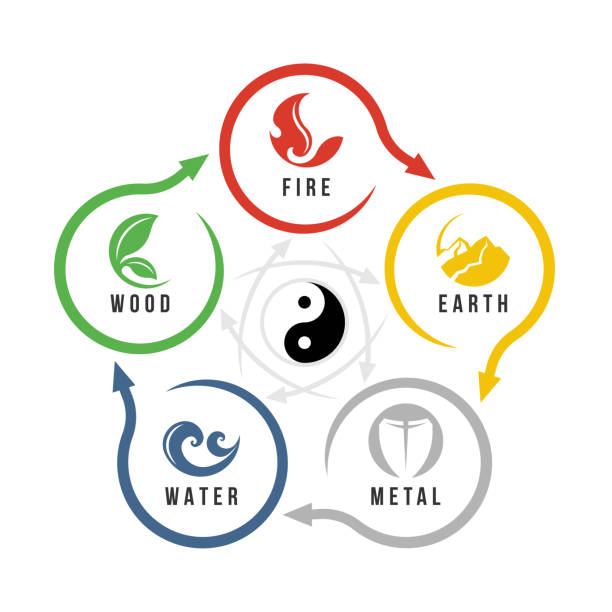
The Five Element Framework is ancient and deeply woven into the fabric of Chinese culture. Five Element theory is the foundation of Chinese disciplines such as feng shui, the martial arts, and the I Ching (The Book of Changes); and it provides a comprehensive template that organizes all natural phenomena into five master groups or patterns or phases in nature: Wood, Fire, Earth, Metal, and Water.

From a health enhancement and medical perspective, the Five Element Framework provides a master blueprint that diagrams how nature interacts with the body and how the different dimensions of our being impact each other, as well as a diagnostic framework to recognize where imbalances in the body, mind, emotions, and spirit lie.

The Five Elements include the five Yin organs – Lung, Kidney, Liver, Heart, Spleen (and their corresponding Yang organs: Large Intestine, Bladder, Gall Bladder, Small Intestine, and Stomach respectively) – and address the interconnected relationships between them. Within Medical Qigong and Classical Chinese Medicine, we can treat disease and illness – and sometimes even acute issues such as pain – associated with each organ (or organ system) through specific energetic treatments, exercises, and food or supplement recommendations.

As a Medical Qigong practitioner, I often teach my patients a special set of exercises called the Wu Xing Jing, or Five Elements Health Form. Each exercise in the Five Elements Form is targeted to a specific organ system and helps to support, regulate, and balance that organ.

The version of the Wu Xing Jing I usually teach is actually a Dao Yin form. Dao Yin exercises are about how you can stretch and make the body become supple through therapeutic awareness of the movements as you are doing them. They are very similar to Qigong exercises; however they were developed thousands of years ago and are thought to be precursors to Qigong. Certain Dao Yin forms have come down to us from ancient times and are still practiced today, although they may not be as well-known and therefore not as widely taught as Qigong.

These exercises work through the principle of Yin and Yang, in that when something reaches its extreme, it’s going to take on its counterpart. When something becomes too Yang, it becomes Yin, and vice versa. Through these exercises you are taking something to the state of full contraction or extension, then returning it back to its opposite. This has physiological benefits, helps move the Qi or internal energy to where it’s needed (or moves it away from where it is excessive), helps heal or maintain health of the organs, and opens up the energy pathways of the body.

By the way, if you are interested in learning more about the Five Elements / Wu Xing Jing Dao Yin Form, click here.

In my next post, I’ll explain how we apply the Five Element Framework specifically to the current season, Spring, and its associated element and organ, Wood / Liver. We’ll discuss the physical and emotional health aspects of Liver and how best to support your Liver and overall health, especially now that Spring Has Sprung!

Be Like the Winter Buddha

“Winter is Coming?” No, Winter Is Here!

Finally, here in Central Texas, we’re experiencing winter weather. Ice, freezing rain, temps in the 30s and 20s. Not much snow, though.

So far it has been a very mild winter for us. When I have my Qigong classes perform exercises to support the Kidney organ system, as we do in Winter, it feels a little funny. However, it’s important that we follow the seasonality inherent in the Five Elements, or Five Elemental Phases, which help support our health AND the prevention of illness or disease.

If you’re not familiar with the Five Element Framework, here’s some background:

The Five Element Framework is ancient and deeply woven into the fabric of Chinese culture. Five Element theory is the foundation of Chinese disciplines such as feng shui, the martial arts, and the I Ching (The Book of Changes); and it provides a comprehensive template that organizes all natural phenomena into five master groups or patterns or phases in nature: Wood, Fire, Earth, Metal, and Water. From a health enhancement and medical perspective, the Five Element Framework provides a master blueprint that diagrams how nature interacts with the body and how the different dimensions of our being impact each other, as well as a diagnostic framework to recognize where imbalances in the body, mind, emotions, and spirit lie.

The Five Elements align with the five Yin organs (and their corresponding Yang organs) as well as with the seasons, as follows:

-METAL ELEMENT: Lung (Large Intestine), Fall

-WATER ELEMENT: Kidney (Bladder), Winter

-WOOD ELEMENT: Liver (Gall Bladder), Spring

-FIRE ELEMENT: Heart (Small Intestine), Summer (Heart also includes the Pericardium and Triple Warmer)

-EARTH ELEMENT: Spleen (Stomach), Late Summer (Spleen also includes the pancreas)

In our Qigong classes, we practice exercises from an ancient set of Dao Yin exercises (the Wu Xing Jing) which are similar to Qigong exercises. However, they were developed thousands of years ago and are thought to be precursors to Qigong. Certain Dao Yin forms have come down to us from ancient times and are still practiced today, although they may not be as well-known and therefore not taught as widely as Qigong. There is a specific exercise for each of the Yin organs (which therefore also benefits its Yang organ pair). The exercises have physiological benefits and help move internal energy to where it’s needed (or move it away from where it is excessive), help heal or maintain health of the organs, and open the energy pathways of the body. The movements of each exercise stimulate blood and lymphatic flow in a controlled and gentle manner. They bring vitality into the body and help keep us feeling vibrant and healthy.

The Kidney is the repository of our “Jing”, or pre-natal qi or essence. We are each born with a finite amount of Jing and it’s important to safeguard this precious resource. It is the reserve generator of energy in the body and supplies extra Qi to the other organs when necessary.  From a western medical perspective, Jing Qi relates to our cellular DNA and our body’s hormonal reserves that support healthy aging.

The Kidney corresponds to a complex system of organs and structures including the reproductive system, the adrenal glands, the ears, the bones, and the brain.

Fear is the emotion associated with the Kidney. If you often have severe panic attacks, anxiety, and fear, or you’re just afraid to make a decision or go for something, or feel like you lack willpower — your Kidney energy may be running low or be imbalanced.

Balance and harmony in the Kidney manifests as courage or confidence, strong willpower and endurance or persistence. We can draw upon wisdom and our inner knowing to overcome our fears.

Winter is the season associated with the Kidney and its partner organ, the Bladder. During this season, we include specific exercises which focus on our Kidneys when performing our Qigong. We also eat foods that support the Kidneys, as well as adopt a slower pace. In fact, during winter, it’s important to slow down, conserve energy, sleep longer – in other words, go with nature and “hibernate’, renew, and get more rest.

So follow the example of the “Winter Buddha” (see above photo). It’s snowing, it’s cold, yet the Buddha maintains an impervious, quiescent state. But don’t let the apparent stillness or lack of activity fool you! Inside, Jing / Vital Energy is being replenished, old fears are being worked out and transformed, and the important systems such as the central nervous system (brain and spine), bones and marrow, and important hormones, are rebuilding.

This quiescent cycle will help restore your energy and reserves so you are ready to burst forth in the spring.

To learn more about the Five Elements DaoYin (Wu Xing Jing) including the full set of exercises, click here. Discover the master blueprint to a powerful health practice – in 6 short weeks!