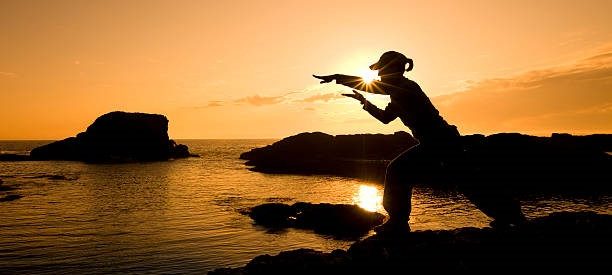
Stand Up and Move Forward

As I was walking the other day, I listened to the Audible version of Doris Kearns Goodwin’s latest book, “Leadership in Turbulent Times”.

I highly recommend the book. It focuses on four of our finest presidents – Abraham Lincoln, Teddy Roosevelt, Franklin Roosevelt, and Lyndon Johnson – and the “crucible” experience and hardship each went through to become an effective, even transformational, leader.

Goodwin’s description of Franklin Roosevelt’s being stricken with polio, and his long, difficult recovery and return to public political life, reminded me of the importance of our 8X meridians. Well, it reminded me of a lot more than that! But hey, I’m always mindful and making note of the energetic and qigong principles all around us.

Anyways, Franklin fought to develop his upper body and figure out how to leverage various tools, such as his heavy metal leg braces, so he could “walk” again. Of course, his walking involved the heavily demanding task of using crutches and his strengthened upper body to drag along his legs. Alternatively, he would walk arm in arm with one of his sons for support and drag those legs along.

His drive, determination, and innate optimism were incredible! Roosevelt was driven by his belief that he needed to be able to once again “stand upright” and “move forward” physically, to have any chance of acceptance and effectiveness as a political leader.

So, let’s discuss two sets of meridians that, along with our core 8X, enable us to physically and psychologically stand upright and move forward.

Our Beautiful Energetic Matrix

The “Between Heaven and Earth” form activates the Eight Extraordinary Meridians (the “8X”) which in turn strengthens our natural energy matrix and helps us stay healthy and resilient.

We build on our connection with Mother Earth and her life-giving yin energy. As we move through our day-to-day lives, we deal with the material, the substantial, the daily cares of living, and the to-do’s from our task list. However, every now and then, we should connect to Heaven to recharge and renew with that heavenly yang energy. This is where our inspiration and creativity come from.

The cycles of Earth and Heaven – yin and yang – work and recharge – activity and rest – doing and creating – mirror the universe around us. Through reflecting these cycles, the Between Heaven and Earth exercises provide a wonderful way to recharge.

As we wrap up our discussion of this form, I’d like to focus on two sets of the 8X meridians that don’t get as much attention: the Linking Vessels (Wei Mai) and the Heel Vessels (Qiao Mai). There is a Yin and Yang version of each of these, resulting in four meridians that combine to make a circuit that moves up the front of the body and down the back (or alternatively in the opposite direction).

Basically these meridians run from the end of the limbs (legs or arms) into the torso, and back to the limbs again. You can picture them as broad bands or thick hoses of energy that run along the center of your limbs and torso. Each of these connects with the core 8X meridians, including the Conception Vessel (Ren Mai) that runs along the front centerline; the Governing Vessel (Du Mai) that runs along the back centerline; and the Belt Vessel (Dai Mai) that connects like a wide belt or sash.

These core meridians form the beautiful energetic matrix or cage which embodies our constitutional energy. Our 8X are keys to our resilience, health, energy levels…as well as our ability to adapt, to overcome, to recover, and ultimately to come back stronger.

The Linking and Heel Vessels constitute what is called the “Macrocosmic Orbit” which is a circulation that moves energy from the limbs into the torso and then back out again to the limbs. This circulation promotes our ability to move and support our bodies. It also provides the means to move energy throughout our body, to help remove or reduce stagnation or blockages, repair or heal internally…and even project energy to help heal others.

“Endure Consistently and Confidently”

Beyond the physical and energetic constructs, our Linking and Heel Vessels also play crucial roles in our mental and emotional formation.

The Yin and Yang Wei Mai / Linking Vessels help to balance Yin and Yang and demarcate major transformations over time. The Wei Vessels provide the mechanism for significant change – for example, to reverse disease or pathology at any time; or to make significant changes to habits and lifestyle. This is your constitution, your innate ability, your “Optimistic Channel”.

Your Yin Wei Mai pertains to deep internal beliefs about your purpose and the meaning you ascribe to life. It provides drive and focus so you can get through almost any hardship.

Your Yang Wei Mai places you into the sea of possibilities. When you pair infinite possibilities with meaning, purpose, and validation, you generate a deep constitutional flow through which you give yourself permission to make your own choices in life. You can see the best possible outcome, and you free yourself to to do what you really want to do with your “one wild and precious life”, as Mary Oliver puts it.

The Yin and Yang Qiao Mai / Heel Vessels are how you stand up to the world. Do you have an internal locus of control? Can you set appropriate boundaries? What are you willing to grow into? They also reflect whether you are primarily an introvert (yin) or extrovert (yang). These vessels also affect your moral and ethical standards and form your internal compass.

Your Yin Qiao Mai is about understanding you are all potential and appreciating your light. It’s the depth of coming to realize and appreciate what you really offer to the world – AND your obligation to bring your gifts out into the world. Key point: Don’t underestimate or dismiss your light. Appreciate your unique gifts and abilities.

Your Yang Qiao Mai is about shining your light out into the world. It’s how you manifest in the world, how you show up. Are you overly worried or concerned about other peoples’ judgments or how you are being received? Or have you grown and matured enough to just say “NEXT!” at any rejection and keep on moving and showing up? Key point: Don’t hide your light! Let your gifts shine out in the world – we need them! We need that unique and wonderful YOU to show up!

You Can Do It!

Dr. Karen

“Endure consistently and confidently. Keep walking – keep moving toward ‘The Next One” [i.e., your next goal or important work or achievement]. Because walking means change is possible.

-Masaaki Hatsumi, Soke (Head Instructor) of the Bujinkan Dojo and 34th Soke of Togakure Ryu Ninjutsu

Heaven & Earth and Yin & Yang

The postures and simple movements of the Between Heaven and Earth form help condition us to the vital cycles and rhythms of life.

For example, in our Qigong practice, we devote a lot of time to centering and grounding. These two skills are so important in our Qigong – indeed, they are critical life skills. Life throws a lot at us. Centering and grounding can help you take the incoming fire or stress without overreacting, enabling you to deal with it more effectively. These two skills can also keep you younger.

As the saying goes, “A mind that can control its response to stress is the world’s most advanced anti-aging technology.”

When we ground, we focus primarily on our lower dan tien or energy center (lower abdomen) and on connecting through our feet to the Yin energy of Mother Earth.

However, when we ground, we also enhance our ability to take in Yang energy from Heaven.

Think about it: most buildings and homes have a lightning rod typically located on the roof of the building or in the area where the electrical and other wiring comes into the house. The wire of the rod connects to a metal base that is implanted or stuck into the ground. The rod serves to attract any lightning strike that might otherwise hit the building or house and carry the current into the ground.

Likewise, when we stand and ground, we are attracting heavenly energy or Qi into our bodies, without even having to think about it.

Which Connection is More Important?

With Between Heaven and Earth Qigong, we are more targeted and intentional on accessing energy from Heaven as well as Earth. The postures are representative of the ways we naturally connect to Heaven and Earth in our daily lives. At all times, we maintain a strong connection to Earth through the feet and Hui Yin (point on the perineum). We can also connect quite strongly through our hands.

On the other hand, the connection with Heaven through the Bai Hui (crown of head) typically is not as strong. You can really feel it when the Bai Hui opens – it’s a clear sensation. However, the feeling is like a funnel through which the energy pours, resulting in a smaller stream coming in and down through the point. Therefore, in certain postures we lift our hands and face toward Heaven to help strengthen the connection.

It would seem that our connection with the Earth is the most important. As we move through our day-to-day lives, we deal with the material, the substantial, the daily cares of living, and the to-do’s from our task list. However, every now and then, we should to connect to Heaven to recharge and renew with that heavenly yang energy. This is where our inspiration and creativity come from.

These cycles of Earth and Heaven – yin and yang – work and recharge – activity and rest – doing and creating – mirror the universe around us. Through reflecting these cycles, the Between Heaven and Earth exercises provide a wonderful way to recharge. They activate the Eight Extraordinary Meridians (the “8X”) which in turn strengthens our natural energy matrix and helps us stay healthy and resilient.

How Do I Get Started?

If you’re interested in learning more about Qigong, Breathwork, and related energy disciplines, a great way to get started is with the introductory course, Breathing & Qigong for Health and Energy. In just four weeks, this course provides you with a wonderful introduction to these ancient and vital practices. I bypass all the “woo woo” stuff and focus on the foundational elements of a successful practice, so you can reap the benefits from your first day of learning. It’s like taking private lessons with me (but at a much lower cost).

So, from now on, anytime you stand, breathe, and ground, place a little bit of your awareness on your Bai Hui point at the crown of your head. See yourself as a lightning rod, allowing Yang energy from Heaven to gently funnel into the top of your head and diffuse and settle down into your body, energizing you from head to toe. At the same time, maintain your connection to Mother Earth and enjoy the Yin energy coming up from the soles of your feet into your lower abdomen.

“Suspended Between Heaven and Earth”. There’s no better place to be.

You Can Do It!

Dr. Karen

Plucking Your Strings

When we think about Qigong or Breathwork, we often focus on the internal benefits we derive from the induction of vital energy, or qi, caused by the combination of movement, breathing, and focused intention. But there is an additional benefit from doing Qigong or related Dynamic Energy Exercise that we may forget about or not even be aware of.

In Classical Chinese Medicine, we recognize three levels of qi: wei qi, ying qi, and yuan qi. The most superficial of these is our wei qi (pronounced “way chee”), or “guardian qi”, which helps protect us from external pathogens. Wei qi includes not only our immune system, but also our mental and emotional resilience.

You see, “pathogens” or “pathogenic factors” refer to things like bacteria and viruses (a lot of people get a cold in winter), infectious agents or situations (remember COVID anyone?), and even dramatic changes in the weather which can impact folks in any season. They also refer to negative emotional content stemming from uncomfortable or stressful environments or situations, and/or from negative people or unpleasant interactions – in other words, psycho-emotional factors that can reduce the robustness of our immune system.

Your wei qi is akin to your armor. Anything you can do to enhance it is important to maintaining your health AND longevity. When you can set up a strong energetic barrier or bubble around you, you feel safer and more confident. Your wei qi is also associated with involuntary, autonomic processes, such as your heart rate, sweating, and even the peristaltic activity within your digestive system. Pretty important stuff!

One of the fundamental Qigong practices I teach is to “build your bubble” using breathing and intention to build the strength of the wei qi. This powerful practice includes two components that I teach in my course, “Breathing & Qigong for Health and Energy“.

The Other Way to Build Wei Qi

We also build wei qi by exercising. The sinew channels, which include muscles, tendons, ligaments, fascia, and skin (and the smooth muscles of the gut), are conduits of wei qi.

However, certain types of exercise are more effective than others at strengthening fascia, tendons, and ligaments.

The Daoist expression “Plucking the Strings” refers to the effective exercising of the sinews, especially through our practice of Qigong.

Over the centuries several Qigong forms, such as the Yi Jin Jing (Muscle-Tendon Changing Classic) and the Ba Duan Jin (Eight Pieces of Brocade), were developed to stretch and strengthen tendons, ligaments, and fascia, along with inducing or enhancing the flow of vital energy within the meridians.

Focusing on the tendons and ligaments is the real secret to building and retaining strength and flexibility, which in turn helps us retain our mobility, balance, and vital capacity.

The challenge is this: Much of the exercise we engage in is targeted at building our muscles – which is important, of course. But most people don’t do enough to build and maintain the strength of their tendons and ligaments. As a result, they become less flexible, things get tight, injuries begin to happen. Or they lose the ability to do simple things as their grip strength deteriorates (grip strength is a key marker of aging or, alternatively, relative youthfulness and longevity).

“Plucking the Strings” also infers a sense of play and enjoyment. Practicing Qigong is a fun, wonderful, fulfilling, and minimal impact way to stretch and strengthen without the potential risk of injury from other exercise modalities.

Don’t Get Out of Tune

When I was a child of about eight, my parents gave me my first real guitar. What an awesome gift! I played that thing every day. At first, I imitated popular songs on the radio and figured out the chords and melodies. Soon after, my parents paid for guitar lessons.

I studied classical guitar for about eight years, until I was 17. And I was good. However, I reached an inflection point. My instructor told me that, to get to the next level, I would have to put in even more time practicing and perform with greater frequency in recitals. At this time in my life, however, I was more interested in the high school sports I was playing, keeping up my grades while taking an aggressive course load, hanging out with friends, and beginning to date.

I just didn’t have that burning desire to become a concert guitarist. I came to the decision that I did not have the time to devote to this level of practice or training. I know my instructor was bummed, but he also understood.

So…I stopped taking lessons. Not only that – I also stopped playing, even for fun.

Once in a great while, I would take my guitar out of its case just to play a little. And every time, it would require extensive tuning because the strings would go slack due to the lack of plucking and strumming.

There are several morals to this sad story, but the key message for you, dear reader, is as follows:

Just as a guitar that is not played will gradually go out of tune…so will your body. AND your immune system. AND your vital capacity. So pluck your own strings on a regular basis!

I’ll have more to say on this in my next blog post. Until then, do your Qigong with a playful spirit. Pluck Those Strings!

You Can Do It!

Dr. Karen

Be Like the Winter Buddha

“Winter is Coming?” No, Winter Is Here!

Finally, here in Central Texas, we’re experiencing winter weather. Ice, freezing rain, temps in the 30s and 20s. Not much snow, though.

So far it has been a very mild winter for us. When I have my Qigong classes perform exercises to support the Kidney organ system, as we do in Winter, it feels a little funny. However, it’s important that we follow the seasonality inherent in the Five Elements, or Five Elemental Phases, which help support our health AND the prevention of illness or disease.

If you’re not familiar with the Five Element Framework, here’s some background:

The Five Element Framework is ancient and deeply woven into the fabric of Chinese culture. Five Element theory is the foundation of Chinese disciplines such as feng shui, the martial arts, and the I Ching (The Book of Changes); and it provides a comprehensive template that organizes all natural phenomena into five master groups or patterns or phases in nature: Wood, Fire, Earth, Metal, and Water. From a health enhancement and medical perspective, the Five Element Framework provides a master blueprint that diagrams how nature interacts with the body and how the different dimensions of our being impact each other, as well as a diagnostic framework to recognize where imbalances in the body, mind, emotions, and spirit lie.

The Five Elements align with the five Yin organs (and their corresponding Yang organs) as well as with the seasons, as follows:

-METAL ELEMENT: Lung (Large Intestine), Fall

-WATER ELEMENT: Kidney (Bladder), Winter

-WOOD ELEMENT: Liver (Gall Bladder), Spring

-FIRE ELEMENT: Heart (Small Intestine), Summer (Heart also includes the Pericardium and Triple Warmer)

-EARTH ELEMENT: Spleen (Stomach), Late Summer (Spleen also includes the pancreas)

In our Qigong classes, we practice exercises from an ancient set of Dao Yin exercises (the Wu Xing Jing) which are similar to Qigong exercises. However, they were developed thousands of years ago and are thought to be precursors to Qigong. Certain Dao Yin forms have come down to us from ancient times and are still practiced today, although they may not be as well-known and therefore not taught as widely as Qigong. There is a specific exercise for each of the Yin organs (which therefore also benefits its Yang organ pair). The exercises have physiological benefits and help move internal energy to where it’s needed (or move it away from where it is excessive), help heal or maintain health of the organs, and open the energy pathways of the body. The movements of each exercise stimulate blood and lymphatic flow in a controlled and gentle manner. They bring vitality into the body and help keep us feeling vibrant and healthy.

The Kidney is the repository of our “Jing”, or pre-natal qi or essence. We are each born with a finite amount of Jing and it’s important to safeguard this precious resource. It is the reserve generator of energy in the body and supplies extra Qi to the other organs when necessary.  From a western medical perspective, Jing Qi relates to our cellular DNA and our body’s hormonal reserves that support healthy aging.

The Kidney corresponds to a complex system of organs and structures including the reproductive system, the adrenal glands, the ears, the bones, and the brain.

Fear is the emotion associated with the Kidney. If you often have severe panic attacks, anxiety, and fear, or you’re just afraid to make a decision or go for something, or feel like you lack willpower — your Kidney energy may be running low or be imbalanced.

Balance and harmony in the Kidney manifests as courage or confidence, strong willpower and endurance or persistence. We can draw upon wisdom and our inner knowing to overcome our fears.

Winter is the season associated with the Kidney and its partner organ, the Bladder. During this season, we include specific exercises which focus on our Kidneys when performing our Qigong. We also eat foods that support the Kidneys, as well as adopt a slower pace. In fact, during winter, it’s important to slow down, conserve energy, sleep longer – in other words, go with nature and “hibernate’, renew, and get more rest.

So follow the example of the “Winter Buddha” (see above photo). It’s snowing, it’s cold, yet the Buddha maintains an impervious, quiescent state. But don’t let the apparent stillness or lack of activity fool you! Inside, Jing / Vital Energy is being replenished, old fears are being worked out and transformed, and the important systems such as the central nervous system (brain and spine), bones and marrow, and important hormones, are rebuilding.

This quiescent cycle will help restore your energy and reserves so you are ready to burst forth in the spring.

To learn more about the Five Elements DaoYin (Wu Xing Jing) including the full set of exercises, click here. Discover the master blueprint to a powerful health practice – in 6 short weeks!