Last Friday, I flew from Austin to Panama City Airport (ECP) to visit my parents and brother. My brother picked my up at the airport and we made the drive from Florida up to the lower southeast corner of Alabama where they live. As we drove, I observed that there is STILL damage visible from Hurricane Michael, a devastating CAT 5 storm that hit the Florida Panhandle back in October 2018. Never expecting that…
…we would be in the path of a hurricane now!
Yes, Hurricane Helene is currently approaching the Florida panhandle, this time drawing a bead on the Big Bend area of the coast. She’s expected to grow to a CAT 4 storm with tremendous, possibly record-setting storm surge along areas of the Florida coast. She’s a “big girl” too – a huge storm whose winds and rains have been hitting our area in Lower Alabama for the past four hours. With more to come.
Our impacts here are yet to be seen, but we’ve been told to expect CAT 1 or CAT 2 hurricane effects. Fortunately, we will be on the west side of the hurricane and not feel the full force about to be endured in Florida and Georgia. Nevertheless, we completed our preparations yesterday. The schools and many businesses are closed today or are closing early. We’re as ready as we can be.
I feel for those folks along the Florida coast, many of whom have endured an increasing number and severity of hurricanes in the past five years. Idalia is the one most cited by folks in the Big Bend area, especially along the barrier islands such as Cedar Key. I hope and pray these folks battened down the hatches as well as they could – and then got the hell out of there!
I understand the desire to stay and ride it out, in order to protect your home or business and be on the ground to begin recovery. We went through the same when my parents first retired and build their dream retirement home along the coast in North Carolina. The decision to stay or evacuate can be an agonizing one. You scrutinize each new update, trying to decipher whether you can ride it out safely OR you better leave. If you wait too long to make that decision, you then get stuck in massive traffic as folks evacuate. Or, worse yet, you are stuck and forced to ride it out.
One more data point: when I was age 9 to 11, we lived in Tallahassee, Florida. One of the key things I remember about living there is the proliferation of beautiful, stately trees. Especially the oaks with the Spanish moss hanging off the branches. Tallahassee will be right in the eye of this storm as it passes through. I fear many trees will be uprooted or damaged.
Anyways, I wish the best possible outcome to the people about to be impacted.
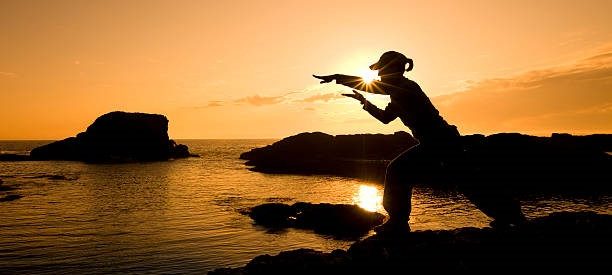
In the meantime, I did a little training out on the back porch. It’s the first time I can remember actually working out during a hurricane.
A little back story: It is said that the founder of Shotokan Karate, Funakoshi Gichin, would stand out on the roof of his house on Okinawa during monsoons (the Pacific ocean version of hurricanes). He would grip a tatami mat with both hands, which acted like a sail, and would strive to hold his horse stance on the roof.
As described by an observer and martial arts colleague:
“Now the young man on the roof assumed a low posture, holding the straw mat aloft against the raging wind. The stance he took was most impressive, for he stood as if astride a horse. Indeed, anyone who knew karate could readily have seen that the youth was taking the horse-riding stance, the most stable of all karate stances, and that he was making use of the howling typhoon to refine his technique and to further strengthen both body and mind. The wind struck the mat and the youth with full force, but he stood his ground and did not flinch.”
OK, I know my performing techniques and forms on my parents’ back porch – BEFORE the hurricane even arrives – is nothing like what Funakoshi did.
However, I can report that, energetically, training in the wind and rain felt different. It felt exhilarating. You can sense the current energy as well as the impending energies to come. I plan on periodically going outside for as long as I can and to breathe, stand, and experience the wind, energy, and power of Mother Nature.
My Uechi-Ryu instructor, Grandmaster George Mattson, known as “The Father of Uechi-Ryu Karate in America”, just published his fifth major book, titled “The Dynamic World of Martial Arts: Unleashing the Power Within”.
I’ve immensely enjoyed reading the book. It’s a mix of Mattson Sensei’s experiences over the years as one of the leading proponents of traditional martial arts in the U.S.; his perspectives on the changes we’ve seen over the decades in how martial arts are viewed, practiced, and taught; and a deeper view into his own training and mindset practices that have helped him achieve such longevity as a martial artist, instructor, and leader.
Mattson Sensei asked me and a few other instructors to provide some sections for the book. I was honored to be asked AND I’m thrilled that Resilient Wellness Qigong is featured in its own small chapter within the book.
Why Uechi?
I first trained in Uechi Ryu Karate back in the early 1990s. (Yes, I am dating myself). I was already a Second Degree Black Belt in a traditional style of Tae Kwon Do and was interested in studying a martial art that would be a good complement to the medium to long range strategies of my primary art. Uechi is an infighting style with roots in Southern China. It’s also a “fighting style” with a focus on developing actual fighting skills and reactions with many open hand techniques, low kicks, and simplified stances and footwork.
My first Uechi instructor was Sensei John Carria who is one of the leaders within the Uechi community. John was (and is) an excellent instructor and continues to learn, develop, and share those learnings through teaching and his own book that came out last year. (Click the book cover to the right for a link to John’s book.)
When I first started learning Uechi, I truly felt like a fish out of water. It was so different from what I was used to. But it also intrigued me. I trained hard and eventually earned a First Degree Black Belt under Carria Sensei’s instruction. I knew I still had a lot to learn and sensed a depth to the art that would take some years to fully understand and appreciate. And it has not disappointed.
When I became a mom, I took some years off from formal training. I would train on my own and hit the bags, and sometimes work out with my son. But it was years before I got the bug to train formally again as a student. As I searched for and considered options for training, I happened upon Mattson Sensei’s virtual dojo, AtHomeKarate.com. I saw that he had pioneered virtual instruction years prior, long before advancements in remote communications technology via the internet made virtual communications easy and inexpensive. Through his early experimentation, George developed a highly effective approach for teaching and coaching long-distance, helping students and black belts from all over the world either commence their martial arts study, OR continue their Uechi-Ryu development.
“Call Me George”
One of the things I love most about Mattson Sensei is how down-to-earth he is. The first time we spoke on a coaching call, I addressed him as Sensei. He immediately said, “Call me George”. He has no need for the “Grand Poobah”, “Super Mega Grandmaster” titles that seem to have proliferated in the martial arts. Given his stature within the Uechi world, and martial arts world in general, this was so refreshing – and a testament to the quiet confidence he enjoys after many decades of contribution.
He is also super supportive and uplifting. I came back to Uechi as an out-of-shape mom and businesswoman who wanted to train in a meaningful way but did not have a good dojo or training opportunity close by. Would I be able to train martial arts again without injuring myself or looking like an idiot? George assuaged my concerns. His approach is to get going and start training and, as he says, “Train Smart. Train Often”. His key lesson is consistency. Do something every day, even if it’s just your three Sanchins and some pushups. And build from there.
I also appreciate that George calls you on your bullshit. He lets me know if he thinks I have not trained as hard as I should have or progressed on something like I should have. We all respond better to someone providing clarity and honesty in their feedback, because we want to know where we stand and how we are doing.
And George models everything he pushes his students and instructors to do. He’s 86 years young, still trains every day, still loves to teach, and continued to inspire and empower so many of us through his instruction and example.
Anyways, I highly recommend the book for any and all martial artists. And if you’ve never trained, I still recommend it. Who knows: the stories, advice, and perspectives George provides through the book may inspire you to learn more or even begin training.
(And be sure to check out the Qigong chapter starting on page 41!)
Even if you’re not into martial arts, you’ve probably heard of
Bruce Lee. He is, hands down, the best-known martial artist, and
martial arts movie star, in the world.
Perhaps, for younger generations, Jackie Chan or Jet Li are more
famous. I’m not sure. But I doubt it.
A few years ago, I read an interview with the editor of Black Belt
magazine, one of the longest running periodicals covering the
martial arts space. Anytime they published an issue with Bruce Lee
on the cover, the editor said, they saw their sales increase by
at least 300%.
Even today, Bruce Lee still pulls.
It’s funny, but…even though I have loved his movies, books
written by and about him, and articles written about him….over
the years, I would say the “Bruce Lee Fighting Method” series of
books (published shortly after his untimely death in 1973) have
been my favorites – and have had the most impact on my own martial
arts career, as well as my overall approach to fitness and health.
I read those books so many times, they were starting to fall apart.
Lord knows where they are today. I think maybe my parents dumped
them, along with some other “stuff” I would have preferred to keep,
when I was away at college and they were trying to clear out the
house in preparation for moving.
Anyways, I followed Bruce’s advice in the books and developed my
own approach to training. (This was when I was younger and my
mom wouldn’t yet let me train formally in the martial arts. So I
was stuck figuring out things for myself.)
I recall rigging up our basement with punching pads and targets,
plus a weak version of a heavy bag made out of a canvas rucksack,
some sand and some padding. (That thing was rough on the knuckles.)
I drilled, stepped, kicked and punched. And I incorporated
other techniques and training concepts from the karate books I
had.
However, I also did something else in my training – something
extremely important.
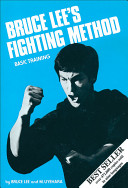
Within the “Bruce Lee Fighting Method” series, the second book –
the one with the blue cover, for those of you who may be familiar
with these books – was titled “Basic Training”.
Bruce Lee Fighting Method, Vol 2: Basic Training
Basically, Bruce’s point throughout this volume was that just
practicing your art or sport is not enough. You also need to
do supplementary training to get your body in optimal shape –
to help you be better at your chosen activity, as well as help
you avoid injuries.
“One of the most neglected elements of martial artists is the
physical workout. Too much time is spent on developing skill in
techniques and not enough in physical participation.”
He railed about many of the martial artists he had seen in his
travels, guys (and some gals I imagine) who were grossly out
of shape, but claiming to be martial arts experts.
His concern was, what if one of these “experts” got into a
real situation? Would they have the stamina and power to get
out of the scrape?
If not, could they really be called martial artists?
Now, not everyone who practices martial arts does so solely
to become a better fighter or for self defense purposes.
This may be an aspect or motivation for training. But in my
experience, for most people it’s only one of several reasons
for taking up the practice of martial arts.
However, I think that a serious student should be aware of
the need for self defense, and should therefore devote some
energy and time into body conditioning and sparring –
including some hard sparring once in awhile.
Here’s another thing. I can recall coming up in the ranks
and being disgusted by some of the black belts at the school
where I trained.
These were people who trained and did what they needed to do
to pass the black belt test….then stopped training. They
would come into the training hall once in awhile, strap on
their black belt, and parade around.
They might go through a few forms or basics. They would butt
into other peoples’ training and offer unsolicited advice.
Then they would change and leave. Without needing a shower,
mind you, because they had hardly broken a sweat.
Not exactly a good role model for us junior students!
Plus, they had totally missed the fact that earning your black
belt is just the beginning. There is so much more to learn and
improve upon beyond it!
Bruce Lee’s advice is just as important today as it ever was.
Here’s where I see it needed most:
Many of the recommendations for exercise from the “powers
that be” emphasize moderate physical activity, three to
four times per week.
As I mentioned in an earlier message, this is a good starting
point. It helps to get people going. But it’s certainly not
sufficient for reaching the higher levels of fitness and robust
health that many of us desire.
Anyways, these recommendations also – sensibly – suggest
that people pick up a sport or activity they enjoy, so they
will be more likely to continue the activity.
I agree with this. I know for sure that my love of martial
arts, wanting to get better and excel at them, enjoying
teaching and coaching others, and just plain enjoying the
process of training, helped me stay in active, high level
training for a good number of years.
There were many days when I probably would have blown off
a regular workout, like going to the gym…but decided to do
just a little martial arts training. Maybe a few forms, a few
basics, something to get me moving a little and then call it
a day.
However, more times than not, my planned short, light “workout”
would morph into an excellent training session. An hour or so
later, I would wrap it up and feel awesome!
However, just doing your chosen activity is not always
sufficient.
Here’s Bruce Lee again:
“Practicing your skill is important, but so is maintaining
your overall physical condition….Proper training is for the
purpose of building your body and avoiding activities or
substances that will deteriorate or injure it.”
Remember that it’s very important to supplement the activity
you enjoy with basic fitness training. Train for endurance,
train for power, train for speed, train for flexibility.
Just as important: train to help prevent injuries.
This is really critical, especially as you get older.
Another important byproduct: you’ll feel better, move better,
perform better…..which means you will enjoy your chosen
activity even more.
If you’re wondering how best to get started with a fitness
program, or if you’re engaged in an activity but not sure how
best to approach this type of supplementary training, then
I’ve got a great resource for you.
This report is an easy-to-read, easy-to-apply distillation of
my many years of learning, experimenting, failing and succeeding
in the areas of enhancing fitness and health.
I cover – in a very concise and hard-hitting way – the most
important elements of a rational, efficient, and effective
approach to getting fitter and feeling healthier than you
ever imagined.
If you’re just starting out and getting back into shape, or
perhaps beginning an exercise program for the first time, this
report will point you in the right direction and show you
exactly what to do to get maximum results.
If you’re already exercising and in pretty good shape, the
information in this report will help you take your fitness
program and results to the next level.
These strategies are universal. They are time-tested. They will
work for you, no matter what your current level of fitness is
today. And they will help you get results, fast.
Copies have been flying out of here. THank you to those who
have already ordered their report.
To claim your copy today, click HERE. This will take you
directly to the order page.
Fill in your info and I’ll mail you your special report. (Yes,
this is an actual printed report, not a download). I’ve had
a limited run printed and am offering it for only $19.95 while
copies last. And the shipping & handling is on me!
In addition, if you order today, I’ll also include one of
my most popular special reports, “The Five Most Critical
Mistakes People Make When Beginning an Exercise Program – and
How to Avoid Them”. You’ll receive this one in printed form too.
Superior health and vigor are within your grasp – no matter
what your age or current condition! Let me show you how.
It’s never too late…you’re never too out of shape…you’re
never too old, or too busy, or too whatever….to begin today
to get in great shape, and to reclaim the health and energy
of both body and mind that you deserve.
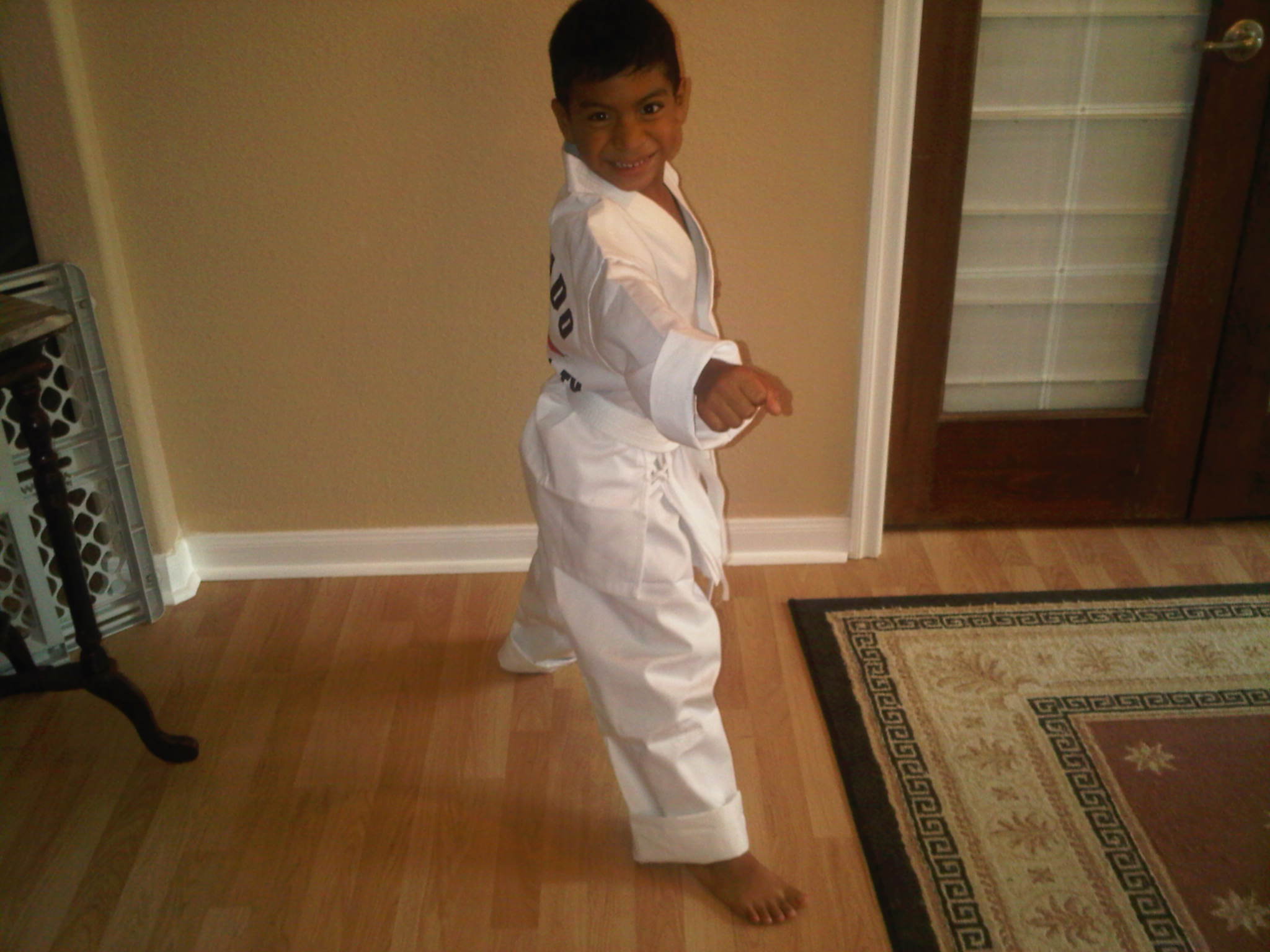
Recently we enrolled our son Miguel, who just turned 7, in
tae kwon do classes.
He’s excited and enthusiastic. And I’m quite proud, since one of
my life-long loves and passions has been martial arts. A chip off
the old block, as they say!
Miguel in his fighting stance, ready for action. How's that for enthusiasm?
One of the most important lessons we are seeking to teach Miguel,
with his TKD lessons as well as with his other activities, such
as soccer, is the importance of showing up.
You’ve heard that saying, “Ninety percent of success in life is
just showing up”.
It’s attributed to Woody Allen, and I believe he actually said
50 percent. People grabbed hold of the thought and embellished
a little.
But he has a great point. It’s true that, very often, we avoid,
dismiss, or shy away from the meetings, classes, events and so
forth that could really make a difference in our lives.
Could be that we think we are too busy. Or we are intimidated or
afraid. Or we are not ready or willing to make the commitment
required.
I know the feeling well. There have been plenty of times over the
years when I didn’t feel like participating in a meeting. I knew
it would be boring, would go on for too long, and might not
achieve any sort of resolution.
But I went anyways, because I knew I might have one piece of
information that could move things forward, or get others thinking.
Or I could add moral support to someone else’s position. Or I
might make a new contact that would prove to be beneficial.
Same thing happens when it comes to your efforts to improve your
fitness or health, lose weight, or better manage the stress in your
life.
You may avoid doing anything because you are afraid of “showing up”.
You are not yet ready to make the commitment to follow through –
to be an active participant and put forth your best effort into
getting better.
Well, when you find yourself hiding or retreating from the
meetings, the classes, the workouts…or from getting the
information and programs you need…or from making the lifestyle
changes that could really move you forward….think about what
Woody had to say.
Just show up. Attend that meeting or class. Do that workout. Order
that book or program. Make a few simple changes to your diet.
Don’t put excess pressure on yourself. And don’t expect perfection.
Guess what: you don’t have to be perfect. In fact, you don’t even
have to be that good to begin reaping the benefits.
For example, Miguel isn’t that good yet. Although he and I have
“trained” together and I’ve shown him some basic stuff, in truth
he is just startigng out. He has a lot to learn.
BUT — he’s enthusiastic. If he shows up regularly for classes,
if he focuses and participates during class, and if he practices
a little each day outside of class…the sky’s the limit!
The truth is, all achievement, all self-development rests on a
very basic principle: “Psychology is 80 percent, mechanics is
20 percent.”
The mindset and attitude that you bring into the endeavour is far
more crucial to its outcome than the specific skills or knowledge
you bring.
Holding positive expectancy firmly in place can help accelerate
your efforts, especially when it comes to the major challenges
that so many of us face, like improving our breathing, losing
weight, better managing our busy lives, or regaining that vital
energy we used to have.
I’ve seen it time and again when working directly with clients
and students.
The ones who are positive and excited get the best results. They
improve their breathing. They reduce their levels of stress. They
lose weight (or gain weight if that is their goal). They feel
energetic and alive again. They begin achieving major goals in
other important areas of their lives.
AND — they enjoy the process.
The ones who are negative or feel like they are being imposed
upon do not get as good results – even if they are already in
better shape to begin with.
And they are the ones I very quickly cut loose. I have better
things to do, and other people to help.
I’ll leave you with some words of wisdom by Norman Cousins, from
“Head First: The Biology of Hope” (1989):
“Hope, purpose, and determination are not merely mental states.
They have electrochemical connections that play a large part in
the workings of the immune system and, indeed, in the entire
economy of the total human organism….
“The modern physician, therefore, will prescribe not just out of
the pharmacy or his little black bag, but out of the magnificent
apothecary that is the human brain, which can activate and
potentiate the healing system.
“The rosters of emotion are hope, faith, love, will to live,
festivity, playfulness, purpose, and determination. These are
powerful biochemical prescriptions.”