What’s the Best Way to Exercise in the Summer?

In my last post, I regaled you with the benefits of the “best time” to exercise each day. (Click here to read it.)

Now let’s discuss the best WAY to exercise – from a seasonal perspective.

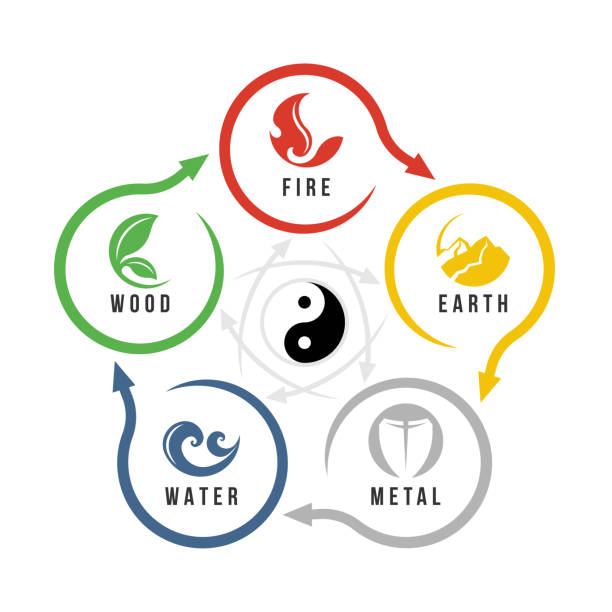
According to the Five Elements Framework – a foundational approach to health within Classical Chinese Medicine and Clinical Qigong – our activity should change with each season. The four seasons provide us with variation and different energies.

Here in the Northern Hemisphere, we are smack in the middle of summer. How should we adapt our exercise during the summer?

For many of us, exercising involves working around the high summer temperatures, which can mean exercising indoors. This may also involve exercising first thing in the morning or later in the evening. The long summer days, with their earlier sunrises and later sunsets, help us feel more energetic and want to engage in greater physical activity.

The summer season is referred to in classical medical texts as “the season of fully flourishing, as all living things in the world are prosperous and beautiful”. The summer season is more yang, reaching its apex of yang energy at the summer solstice. This is also when yin energy begins to emerge. So summer means the intersection of yin and yang energies. This combination causes living things to blossom and yield fruit.

Key to this season is to go to sleep at night after the sun has set (which is later during the summer months) and get up early in the morning with the sunrise (also earlier during summer). Keep the mantra of “growth” in your mind at all times, so as to align with the summer energies promoting growth for autumn’s harvest.

When it comes to exercise, this means get out there and sweat!! Perspiring helps release yang energy and avoid heat becoming stagnant inside your body. You can train hard. In fact, you will notice your body naturally wants to train harder, go longer, and sweat more. This harder training helps boost your overall fitness by conditioning your heart and lungs. It also serves to release toxins and literally purify your system.

When it comes to your Qigong or Tai Chi practice, bear in mind that summer corresponds to the Fire element and the Heart organ system (which includes the Heart, Small Intestine, Pericardium [Heart Protector], and Triple Warmer). Practice your Tai Chi with strong movements and enhanced breathing. Include some of the more physically demanding Qigong exercises or forms. And take some time in each session to stand, breathe, and tap into the Heart virtues of Joy and Peace.

The Heart energy is a pulsating energy. It wants to beat, expand, and communicate. Utilizing the extra energy you feel during summer to stimulate your heart function is much better than during the winter, when your heart energy is naturally lower. Maintaining appropriate activity levels helps enhance your heart’s function, promotes your body’s metabolism (especially fat metabolism), and can help prevent atherosclerosis.

Bottom line: during summer, train hard and sweat freely!

You Can Do It!

Dr. Karen

Let That Shit Go (It’s Good for You)

Let’s apply the Five Element Framework specifically to the current season, Spring, and its associated element and organ, Wood / Liver. What are the physical and emotional health aspects of Liver? And how can you support your Liver and overall health, especially now that Spring Has Sprung?

According to Classical Chinese Medicine, the Liver is the organ responsible for the smooth flow of emotions as well as the smooth flow of Qi and blood in your body. It controls the volume and smooth flow of blood in your vessels and stores the blood. It’s the organ that is most affected by excess stress or emotions. The Liver’s partner organ is the Gallbladder.

The eyes are the sensory organ related to the Liver. If you have any eye issues, including blurry vision, red or dry eyes, itchy eyes, it may be a sign deep down that your Liver is not functioning smoothly. Also, we often consider the brightness in someone’s eyes as an indicator of their overall health and vitality.

The tendons are the tissue associated with the Liver. In Chinese martial arts, they say that strength comes from the tendons, not the muscles. We also focus on tendon and ligament strength and suppleness in our qigong practice.

Anger is the emotion associated with the Liver. If you are often irritable, get angry easily, have trouble unwinding from the day’s activities, have trouble reasoning or going with the flow and letting things go, you are experiencing a Liver function problem. Experiencing these emotions chronically or excessively, such as ongoing frustration, can seriously unbalance the function of your Liver.

Positive attributes associated with the Liver are drive and determination. Think about the “drive”, the “will to life” we see every spring as the tiniest shoots of plants or grass or trees push up through the soil, or even through rocks or cracks in the concrete. In human terms, this corresponds to the person who has will power to overcome challenges and even create new things.

Spring is the season associated with the Liver and Gallbladder. It’s the season of growth and renewed energy, so it’s a wonderful time to work on your Liver. Just don’t get too caught up in the spring’s intense energies. Taking walks in the park or the woods is a fantastic way to rejuvenate. As I said above, the Liver is the organ most affected by excess stress or emotions. So let go of the stress and any anger (see my Buddha T-shirt for one of my favorite phrases…). Also, purging exercises, such as the Five Elements Dao Yin Exercise you can learn here, are a fantastic way to detox your liver.

One thing to also be careful about is to watch the alcohol. If you drink, drink in moderation because alcohol has a direct impact on your liver. Being a beer and wine drinker myself, I hate to have to pass that along, but… a drink or two here or there is not a problem. But if you feel like your Liver may need some TLC, lay off for several weeks and see how you feel.

In my next post, I’ll explore more of the psychological, emotional, and spiritual aspects associated with Liver and Gallbladder.

The Five Elements Framework and How It Can Improve Your Health

The Five Element Framework is ancient and deeply woven into the fabric of Chinese culture. Five Element theory is the foundation of Chinese disciplines such as feng shui, the martial arts, and the I Ching (The Book of Changes); and it provides a comprehensive template that organizes all natural phenomena into five master groups or patterns or phases in nature: Wood, Fire, Earth, Metal, and Water.

From a health enhancement and medical perspective, the Five Element Framework provides a master blueprint that diagrams how nature interacts with the body and how the different dimensions of our being impact each other, as well as a diagnostic framework to recognize where imbalances in the body, mind, emotions, and spirit lie.

The Five Elements include the five Yin organs – Lung, Kidney, Liver, Heart, Spleen (and their corresponding Yang organs: Large Intestine, Bladder, Gall Bladder, Small Intestine, and Stomach respectively) – and address the interconnected relationships between them. Within Medical Qigong and Classical Chinese Medicine, we can treat disease and illness – and sometimes even acute issues such as pain – associated with each organ (or organ system) through specific energetic treatments, exercises, and food or supplement recommendations.

As a Medical Qigong practitioner, I often teach my patients a special set of exercises called the Wu Xing Jing, or Five Elements Health Form. Each exercise in the Five Elements Form is targeted to a specific organ system and helps to support, regulate, and balance that organ.

The version of the Wu Xing Jing I usually teach is actually a Dao Yin form. Dao Yin exercises are about how you can stretch and make the body become supple through therapeutic awareness of the movements as you are doing them. They are very similar to Qigong exercises; however they were developed thousands of years ago and are thought to be precursors to Qigong. Certain Dao Yin forms have come down to us from ancient times and are still practiced today, although they may not be as well-known and therefore not as widely taught as Qigong.

These exercises work through the principle of Yin and Yang, in that when something reaches its extreme, it’s going to take on its counterpart. When something becomes too Yang, it becomes Yin, and vice versa. Through these exercises you are taking something to the state of full contraction or extension, then returning it back to its opposite. This has physiological benefits, helps move the Qi or internal energy to where it’s needed (or moves it away from where it is excessive), helps heal or maintain health of the organs, and opens up the energy pathways of the body.

By the way, if you are interested in learning more about the Five Elements / Wu Xing Jing Dao Yin Form, click here.

In my next post, I’ll explain how we apply the Five Element Framework specifically to the current season, Spring, and its associated element and organ, Wood / Liver. We’ll discuss the physical and emotional health aspects of Liver and how best to support your Liver and overall health, especially now that Spring Has Sprung!