
Are We Wimps – Or Are We Just Typical?

I read a book last week that discussed the increased pace of modern
life, how the resultant stress was leading to health and anxiety
issues for so many people, and how too many were turning to
medications and other unconstructive methods (such as excessive
drinking) to cope.

Sounds pretty typical, doesn’t it? I mean, these days you can’t
open a magazine, read a newspaper, or pass a row of books in the
bookstore without encountering articles and books on stress, coping
with stress, stress management…..as well as anxiety, nervousness,
insomnia, and so forth.

Funny thing is, the book I was reading was written in the 1950s!

And I have also read books published in the early 1900s which
discuss the same issues.

We always assume – at least here in the United States – that the
1950s were an oasis of prosperity, order and calm, and most
families were truly living the American dream. Relative, of course,
to the horrible war that had engulfed the world in the 1930s and
1940s. Relative also to the upheaval and disintegration of social
norms and beliefs that followed in the 1960s.

Yet even within that oasis of slower, simpler times, people felt
rushed, stressed out, unable to keep up with the changes, unable to
cope adequately.

Interesting, isn’t it?

If we could go back in a time machine and visit with a typical family
in the 1950s, we’d probably think them wimps for feeling stressed out
during what we presume to be a simpler, slower time. (I’m speaking
here of typical white America, by the way. Life for black families
in the Jim Crow South was something else altogether.)

But here’s another way to look at this: Are things going to be
even faster, harder, more stressful in our future? One day, will
some writer sitting at her laptop look back and, having read
my stuff about transforming stress, think “Jeez, those people
in the early 2000s had it so easy. Life was slower then. Why
did they suffer so much from stress and stress-related disorders?”

Hmmmm….

Is life really faster, harder, less forgiving and more stress-
inducing today than before? Or are our expectations so much
higher in terms of what we must or should accomplish, how we
should live, how well our careers should go, how fulfilled and
accomplished our children should be, and so on?

Not sure I know the answer to that. But I think it’s clear
that each age, each generation encounters and has to deal with
many of the same types of issues.

Technology has been, and will continue to be, a huge enabler in
nearly every facet of our personal and business lives. But isn’t
it also one of the main perpetrators of our “always on, always
accessible, therefore always on the spot for something” mentality?

Can you ever truly slow down, relax, and experience life in the
here and now when you’re glued to your smartphone, laptop or
high def TV?

Not likely, methinks.

The good news is, you have the power every day to make choices
that can help free you from the bonds of constant electronica
and accessibility.

Indeed, you have the wisdom and power inside you – right now,
today – to make significant, transformative changes in how
you deal with and handle the stresses and strains of modern
life.

Which brings me to my main point of this message to you.

Learning how to calm, slow and deepen your breathing can help
you overcome feelings of anxiety, stress, or anger which may
impede your ability to solve problems or overcome the typical
stresses of modern life.

In my last message, I taught you the basics of box breathing.
Inhale, hold, exhale, hold to a particular count – this simple
and deceptively powerful practice can be quite an enjoyable way
of breathing.

One of the things I like about timing your breathing to a
count is that it helps you regain mental control, reduce all
that monkey chatter, and focus and concentrate better. You’ll
feel more in control and experience quite a mental and physical
boost.

Now, here’s the next level up, so to speak, in your breathing
practice: using your imagination.

Coupling breathing with specific types of visualization and
imaging can be even more powerful, serving as the foundation
for incredible improvement in specific areas of your life.

I’ll have more to say and share about that in my next message.

You Can Do It!

Karen

“Transform Body Mind and Spirit with Dynamic Energy Exercise!”
http://www.BestBreathingExercises.com

Copyright, Karen Van Ness, 2014

To Concentrate Better, Be A Square

Did you know there exists a rich tradition within human history of
integrating breathing practices and techniques into specific
disciplines, including those that support health and fitness…
enhanced mental or physical performance….and even religious and
spiritual practices, such as prayer and meditation.

For example, learning how to breathe properly and fully,
using your entire breathing apparatus, can help you quickly
and easily focus on any kind of mental or physical work you
are about to engage in.

Learning how to calm, slow and deepen your breathing can help
you overcome feelings of anxiety, stress, or anger which may
impede your ability to solve problems or overcome the typical
stresses of modern life.

Coupling breathing with specific types of visualization and
imaging can be even more powerful, serving as the foundation
for incredible improvement in specific areas of your life.

Today let’s focus on a simple but highly effective breathing
exercise that can help you stop stress or overwhelm in its
tracks and enable you to focus or concentrate better on the
task at hand.

Yes, this is for all of you “adult ADD’ers” – as in Attention
Deficit Disorder (ADD) or Attention Deficit Hyperactivity
Disorder (ADHD).

I’ve got some experience with this. Our son Miguel has a
moderate to severe form of ADHD. We are constantly working with
him on developing and implementing simple strategies to help
him stay focused on his schoolwork or whatever task he is engaged
with….AND to regain focus or concentration more quickly when
he is distracted.

I know some adults with ADD too. My better half whs never
officially been diagnosed, but ADD certainly explains some
behaviors we see today (and explains a lot of thing from
chilhood as well). My brother WAS diagnosed with adult ADD.
Again, explains a lot from his childhood (especially from a
sister’s perspective!)

Now, I know there are some folks out there who claim that ADD
or ADHD does not exist, and that parents and school staff are
just looking for a way to medicate the kids so they sit still
and behave like they are “supposed to”.

Well, I can tell you it’s for real. We deal with it every day.

However, it’s possible to deal successfully with it, with the
right combination of behavioral strategies, clear and specific
consequences (both positive and negative), and, in some cases,
with carefully tested and prescribed medications.

The explosive increase in the number of kids diagnosed with ADD
or ADHD is mirrored by the increase in the number of adults
finally getting diagnosed.

However, from my viewpoint, the pace and expectations of the
modern world make every one of us ADD’ers, or at least sometime
ADD’ers.

Ever-present smart phones, iPads, and laptops mean we are
interrupted often with a new email, new tweat, new ping,
or whatever. And our internal wiring compels us to respond to
that ping or dong or song (whatever you have set up for your
alerts) because we are wired to (1) respond to rings and pings;
and (2) to move toward the novel, the break in the routine.

The result is constant interruption, leading to being less
productive and feeling like you can’t focus…leading to feelings
of overwhelm and not being able to get your work or other tasks
completed when you should….resulting in more stress and
strain and even less focus and concentration, and so on and on
in a terrible downward spiral. Unless….

Unless you arrest this process, nip it in the bud. And it’s
relatively easy to do, if you’re willing to take a few simple
steps.

First off, you’ve got to get a handle on the interruptions. With
few exceptions, you don’t have to answer every phone call, and
you don’t have to answer every email or tweat or twat or text
that comes in. So why are you chaining yourself to electronic
notification jail?

Instead, try scheduling specific times when you will check your
devices for emails, texts and so forth, and respond to the ones
you need to during those times. For example, many productivity
experts recommend checking email only two to three times per day.

Not only are you more efficient at working through and responding
to your emails. You’ll also get more work done because you are
focusing on the task at hand for blocks of time, and not allowing
yourself to be pulled away from it to check emails.

Only you can help yourself begin to detox from your electronics
dependency. However, I can help you with a second important
step:

Using your breathing to help you regain control and focus.

In martial arts, particularly in more traditional styles, breath
control is taught throughout the training.

One of the best, yet amazingly simple, breathing exercises I
have used over the years is called “box breathing”.

Basically, you follow the 4 sides of a box or square to control
and regulate your breathing. It’s best to start out using a
count of 4. Here’s how:

-Breathe in for a count of 4; hold gently for a count of 4;
exhale for a count of 4; hold gently for a count of 4.

Seems easy, right? Well, it is deceptively simple. But it’s
packed with benefits.

Breathing and holding for counts of 4 doesn’t seem that challenging.
But you’d be surprised at how erratic and shallow your breathing
typically is – especially if you are feeling stressed, rushed, or
overwhelmed, or if you are working out hard and pushing yourself.

The simple act of controlling your breathing, both in terms of
pace and regularity, allows you to assert control over your
physiological reponse.

To really benefit, be sure to breathe in deeply, using your
diaphragm, and take a full breath.

When I say breathe deeply, don’t go overboard and try to suck
in a huge amount of air. This usually results in tightening
up and trying too hard, which is the opposite of what you want
to do.

Rather, breathe into your lower abdomen as you inhale. Allow
your stomach and sides to expand out. Hold gently, then
exhale fully. Again, don’t strain. Just make sure you have
pushed out all the air, then hold.

This method of breathing is quite enjoyable. It enables you to
regain mental control, reduce all that monkey chatter, and
focus and concentrate better. You’ll feel more in control and
experience quite a mental and physical boost.

AS you gain experience with box breathing, experiment with
changing the counts you use. For eaxmple, extend the amount of
time you hold your breath. Breath in for a count of 4, hold
for a count of 8 or 12, breathe out for a count of 8.

This specific count is a technique one of my Tae Kwon Do
instructors emphasized. We did it often during seated
meditation. It really helps you focus inwardly and gain
mental control.It’s also wonderful for developing greater
lung power.

Technically you’re not following the box or square anymore,
it becomes more like a rectangle or quadrilateral. But you get
the picture.

You should devote part of your time each day to the cultivation
of breath control and power. Making a small investment of time
in dynamic energy exercises – like the ones I teach you in “The
Secret Power of Dynamic Energy Exercise Course, Volume II: The
Dynamic Energy Routine”
will enhance the results you get from
exercise, as well as your internal energy and focus.

Breathing is the direct and instantaneous way to tap into the
life force, the vital energy that flows through each of us.

Performed properly, deep breathing coupled with dynamic
exercises is a powerful method for accessing and flowing your
internal power.

This type of dynamic exercise creates harmony between the breath
and the physical. Not only are you strengthening the muscles
associated with breathing. You also are creating and
increasing a sense of harmony and relaxation across both mind
and body.

It’s health-enhancing and life-extending. I strongly encourage
you to tap into the benefits that await you from investing just
a few minutes a day – or a few minutes at the start of your
regular workouts.

You Can Do It!

Karen_signature

“Transform Body Mind and Spirit with Dynamic Energy Exercise!”
http://www.BestBreathingExercises.com

Copyright, Karen Van Ness, 2014

This “Lost Art” Is Still Accessible to You

Breathing as a daily practice is mostly a lost art in the Western
world.

I first became aware of the power of breathing through my martial
arts training and study. The first art I studied was a fairly
traditional, intensely taught style of Kenpo, which had both
Chinese and Japanese influences.

Later, I studied other traditional arts of both Okinawan and
Korean origin, which also integrated breathing practices and
specific breathing techniques. This provided me with yet another
angle on the practice and power of breathing.

However, my first attempts to practice breathing as a health
practice were actually inspired by my grandfather.

Paa Paa (as we grandkids called him) was a vital, active,
energetic man well into his 90s. As a kid, I used to wake up
early with him. And I mean, EARLY! Paa Paa usually woke up about
4:30am.

When he first got out of bed, he would do what I then thought
were funny stretching exercises. He did them from a standing
position. I would get up and imitate him. As I followed along, I
would also try to follow his breathing pattern. Each movement
had a distinct pattern which aided and enhanced the way the
movement felt.

After that, we would get cleaned up and go to the kitchen to
get some early breakfast. I would sit on his lap and he and I
would read the paper together and get the news from around
the world.

Years later as an adult, I discovered that my grandfather was
actually performing some pretty powerful breathing and energy
exercises that were taught back in the early 1900s as part of
physical culture practices.

Turns out, breathing as an art and a health practice is not
just an Eastern or “Oriental” invention. There actually is a
rich Western tradition of integrating breathing practices and
techniques into specific disciplines, including health and
fitness, as well as religion and spirituality.

It’s probably a direct result of my early mornings with my
grandfather, but….my tendency even today is to spend at least
a few minutes each morning, either at or soon after arising,
on breathing and energy exercises.

It’s such a powerful way to start each day.

The way I see it, this precious time – whether it’s a few minutes
or a half hour – is MY time devoted to self-cultivation and
improvement. I get it done early so that, no matter how crazy
or hectic my day may get later, I’m assured of fitting it in.

Then I get a cup of coffee and start my day.

These first minutes provide a sense of energy, control, calm
and balance that can be difficult to describe. Truthfully, any
time you go inside yourself – whether through meditation or
prayer, introspection or daydreaming – is valuable, creative
and soul-satisfying time.

But there are more concrete benefits as well.

For example, learning how to breathe properly and fully,
using your entire breathing apparatus, can help you quickly
and easily focus on any kind of mental or physical work you
are about to engage in.

Learning how to calm, slow and deepen your breathing can help
you overcome feelings of anxiety, stress, or anger which may
impede your ability to solve problems or overcome the typical
stresses of modern life.

Couple breathing with specific types of visualization and
imaging can be even more powerful, serving as the foundation
for incredible improvement in specific areas of your life.

I’ll have more to say on this subject in coming messages,
and will even share a few of my favorite breathing techniques
with you – ones that are simple and easy to learn and do,
but come packed with deep layers of benefits.

You should devote part of your time each day to the cultivation
of breath control and power. Making a small investment of time
in dynamic energy exercises – like the ones I teach you in “The
Secret Power of Dynamic Energy Exercise Course, Volume II”

will enhance the results you get from exercise, as well as your
internal energy and focus.

Breathing is the direct and instantaneous way to tap into the
life force, the vital energy that flows through each of us.

Performed properly, deep breathing coupled with dynamic
exercises is a powerful method for accessing and flowing your
internal power.

Doing these exercises strengthens your body from the inside
out, and has a more profound and lasting effect.

From a purely practical standpoint, this type of dynamic deep
breathing helps develop breath control, expand the capacity
of the lungs, and build stamina. It improves posture. It also
develops the diaphragm, abdominal and other core muscles in
such way that they are strong and coordinated – a key to
developing power for movement, as in athletics, martial arts,
even activities of daily living.

This type of dynamic exercise creates harmony between the breath
and the physical. Not only are you strengthening the muscles
associated with breathing. You also are creating and
increasing a sense of harmony and relaxation across both mind
and body.

It’s health-giving and life-extending, and I strongly encourage
you to tap into the benefits that await you from investing just
a few minutes a day – or a few minutes at the start of your
regular workouts.

To learn more, visit
http://www.bestbreathingexercises.com/dynamic_energy2.html

You Can Do It!

Karen_signature

“Transform Body Mind and Spirit with Dynamic Energy Exercise!”
http://www.BestBreathingExercises.com

Copyright, Karen Van Ness, 2014

Let’s Count Our Blessings, Shall We?

Just about everyone who has ever flown in a commercial jet has
probably, every now and then, given at least a passing thought
to the unthinkable: their plane blowing up or falling out of the
sky. Especially after 9/11.

Fortunately, it almost never happens. In fact, plane crashes are
exceedingly rare, especially in proportion to the thousands of
flights that occur each day.

But for the 239 people aboard Malaysia Airlines Flight 370, it
did. And, as I’m writing this now, no one has any idea yet about
how it happened. Plenty of hypotheses, but no real evidence or
indication yet.

I feel for the poor souls who have been lost, merely because
they were on that flight. I feel for the families, friends and
coworkers of those who have been lost. I can only imagine how
terrible the waiting must be.

This one struck home for me. I’m a reformed road warrior and have
traveled all over the U.S., Latin America, Europe, and Asia for
both work and pleasure.

I’ve flown out of Kuala Lumpur on that exact same flight path.

At the time, I was heading home after a stint in Asia. Even
though I had a long trip ahead of me, I was looking forward to
seeing my family and sleeping in my own bed.

I imagine many of the travelers on Flight 370 were doing the
same thing – heading home after a business trip. Or they were
heading out on business, or to go visit family.

Would that there were some good answers as to why tragedies like
this happen, but there are not.

All we can do is feel for those who are lost, say a prayer for
their loved ones, and then count our blessings.

No matter what your present circumstances – even if you’re going
through a difficult time in your life – bless your present
circumstances and be thankful that you are alive.

This practice of blessing is an ancient, but rarely taught,
success principal. Its roots go back to early Biblical teachings,
as well as ancient success teachings in various cultures including
ancient Egypt and Babylonia.

In fact, the art of blessing has been called “the ancient secret
for happy living”.

The ancients felt that a blessing carried great power to do good.
Blessing is a powerful way to bring forth the good in any
situation, condition, or person.

Jesus taught to judge not according to appearances, but to judge
according to “right judgement” – that is, seeing the good and
thereby bringing out the best in a condition or person.

This runs counter to the way most of us are wired. I mean, its
easy to bless and give thanks for the good things in life. And
it’s important to do so.

But it’s much more difficult to bless the so-called “bad” things
in life. Whether we’re facing a challenging situation, financial
lack, a health problem, an irritating co-worker, a crappy boss,
misbehaving kids, feeling lonely….

Whatever the challenge may be, we tend to want to complain about
it, to dwell on the negative, and to put ourselves down for
being victim to it. We see the negative (as we perceive it) in
others and dwell on that, instead of seeing the whole person
and the potential within that fellow human being.

Well, I can vouch that there’s a better way. Not that I’ve
mastered this or anything – I’ve still got a long way to go.
But I can tell you that anytime I have faced a big challenge,
when I’ve complained and whined and fretted about it, it’s
just become worse (“worster and worster” as my son puts it).

On the other hand, when I have taken the time to step back,
take a deep breath, and bless the situation, it has almost always
become better. And even when I haven’t seen any substantial,
immediate change, I’ve FELT BETTER about the situation – which
is very empowering.

A great application of this principle is in the area of your
health. You may be dissatisfied with where you’re at right
now in terms of your fitness, your weight, or dealing with an
acute or chronic health condition.

You may have been cursing the situation, your bad luck, your
inability to successfully deal with it, and on and on.

Stop that right now! Place a moratorium on cursing and
complaining. It doesn’t help you solve your problem, and
it sure doesn’t make you feel better. All it does is mire
you, mentally and emotionally, in the bad circumstance or
situation.

Try this instead: bless the situation. Bless yourself. Give
thanks for the testing and the trying time, because you
know it is making you better, stronger, and more capable.

As you bless the situation, basically acknowledge the good
you know will come out of it: the improvement that is on its
way; the important lesson learned which will serve you well
in the future; the goodness you are coaxing out of it.

In other words, take things as they are, but establish the
positive expectation of how things will be.

Here’s a personal example: I’ve been candid about my own
struggles with my weight at different times of my life,
as well as my struggles with asthma.

At times I’ve been pretty hard on myself: condemning myself
for letting my weight creep up; for allowing myself to get out
of shape; for procrastinating on a true effort to exercise
and eat better so I could get to a healthier weight.

You know, it’s OK to be honest with yourself and give yourself
a little kick in the booty once in awhile.

But putting yourself down, criticizing and condemning does no
good at all. It doesn’t empower you to improve the situation.
it only drives you down.

In retrospect, I can clearly see that when I made true progress,
re-invested in my health and fitness regimen, lost the weight
and got in great shape….only happened AFTER I stopped
condemning myself, accepted where I was, and turned my thoughts
and my emotions to the good I knew could come out of the situation.

Part of the good I have realized has been compassion and
empathy for other people.

I’m not one of those super skinny, airbrushed fitness trainers
or models you see on book and magazine covers. I’m a real
person who has struggled with weight and health issues! So I
can definitely relate and have compassion for others who are
in the same boat.

If your mind has been trained to criticize, you may not always
wish to bless and behold the good. It can be a challenge to make
the shift – AND stick to it! But as you persist in training your
thoughts to bless, it becomes easier. And as you see happy
results in your life, you’ll realize your efforts are worthwhile.

Don’t underestimate the power of blessing! It’s a simple but
powerful way to release great good into your life. It can work
to improve every area of your life, if you’ll just give it a
try.

You Can Do It!

Karen_signature

“Transform Body Mind and Spirit with Dynamic Energy Exercise!”
www.BestBreathingExercises.com

Copyright, Karen Van Ness, 2014

Don’t Fall Prey to the “Law of Diminishing Intent”

For the first time in his young life, my son Miguel is playing
baseball. His team has their first scrimmage this morning.

Prior to this year, he never expressed any interest in playing
“pee wee” or little league baseball. Oh sure, we’ve thrown around
the ball with him in the backyard and played wiffle ball. And
he’s been to our baseball mecca, Fenway Park, to see a Red Sox
game.

Now he’s participating in a more organized way.

When he made the decision to sign up for little league, I told him
he would be at a disadvantage to some of the other boys who have
played already. But that should not deter him. The important thing
would be to work on the fundamentals and begin to learn more about
how the game is played.

Which means….

PRACTICE!

So, the day we signed him up, we started to practice.

We agreed to regular practice as a habit. Not only did Miguel
make the commitment to show up – on time – at every practice.
He’s also committed to practice on his “off” days at home.

I’ve insisted on this approach because it offers such a
wonderful tool for success, progress and transformation.

It’s part psychology, part discipline, part leveraging the
power of momentum: the momentum you get from the simple act of
making a decision to do something.

And the best time to act is…..immediately after you have made
that decision.

Engaging in genuine discipline requires that you develop the
ability to take action. You don’t need to be hasty if it
isn’t required, but you don’t want to lose much time either.

Here’s the time to act: when the idea is hot and the emotion
is strong.

When did Miguel and I go out back and start throwing around
the baseball?

The minute we got home from baseball signups.

Since then, we’ve not had to prompt or remind a single time.

Miguel has been the one asking us to go out back and throw the
ball, or work with him on his batting.

It’s become part of his routine now.

Here’s the secret: Take action as soon as possible, before the
feeling passes and before the idea dims.

If you don’t, here’s what happens:

You fall prey to what famous motivational speaker and successful
businessman, Jim Rohn, called the “Law of Diminishing Intent”.

As Jim said, “We intend to take action when the idea strikes us.
We intend to do something when the emotion is high. But if we
don’t translate that intention into action fairly soon, the
urgency starts to diminish. A month from now the passion is cold.
A year from now it can’t be found.”

So take action. Set up a discipline when the emotions are high
and the idea is strong, clear, and powerful. You’ve got to take
action; otherwise the emotion soon passes.

Unless….

Unless you apply it to a disciplined activity.

Discipline enables you to capture the emotion and the wisdom and
translate them into action.

The key is to increase your motivation by quickly setting up the
disciplines. By doing so, you’ve started a whole new life process.

Discipline leads to self-worth and self-esteem.

As Miguel continues to develop his discipline by practicing
and playing and keeping his commitment to show up – on time and
ready to play – to all practices and games, he will develop far
more self-esteem than any amount of praise or encouragement
we can provide as parents.

Of course, our praise and encouragement are important. But when
he sees the fruits of his labors, and experiences the satisfaction
of persevering through an activity, even when it’s not fun or
seems hard (which inevitably it will sometimes), Miguel will have
learned such an important lesson.

How about you?

Did you make the decision at the start of the year – maybe as
part of your New Year’s resolutions – to “finally” get in shape
this year? Then…did you do something about it immediately?

Did the new exercise routine or diet you started seem to just…
fizzle. Or did you not even really get started?

Have you been struggling with some not-so-good habits – habits
you know are sapping your energy, preventing you from reaching
your goals, stealing away your life – maybe even killing you,
bit by bit, which is the case with poor eating and exercise
habits?

Are you unsure of where to start? Do you feel overwhelmed by
everything you could be doing, or should be doing?

Well, you may be suffering from the “Law of Diminishing Intent”.

And I’ve got just the remedy – an excellent place to start, to
help you get the ball rolling.

First: Make the DECISION to get in better shape, to get healthy,
to recapture your energy.

Second: Take ACTION and get my new Special Report, “Ten Universal
Strategies for Optimal Fitness”
. It gives you a well-rounded,
highly effective approach to exercise and fitness.

Third: As soon as you order your own copy of the Report, DO
something good for yourself? Stretch, do some pushups, go for
a walk….breathe!

Those seemingly small actions will help you get started on your
own path to self-discipline, self-esteem, and better health
and energy.

Visit http://www.bestbreathingexercises.com/fitnessstrat.html
to get more information.

You Can Do It!

Karen_signature

“Transform Body Mind and Spirit with Dynamic Energy Exercise!”
http://www.BestBreathingExercises.com

P.S. A good exercise routine can literally rocket launch you to
improved health and fitness, higher energy levels, better brain
and cognitive function, and enhanced productivity.

I wrote my latest Special Report, “Ten Universal Strategies for
Optimal Fitness”, to help you get started. I cover – in
a concise, easy to understand, and easy to implement way – the
most important elements of an efficient, effective and ENJOYABLE
approach to getting fitter and feeling healthier than you ever
imagined.

The information in this report will point you in the right
direction and show you exactly what to do to get maximum
results.

To read more about it, or to claim your copy today (plus a
special bonus offer), go to
http://www.bestbreathingexercises.com/fitnessstrat.html.

Copyright, Karen Van Ness, 2014

One of the Wisest Things Ronald Reagan Ever Said

Ronald Reagan, 40th President of the United States of America
There are simple solutions to our problems – just not easy ones.”

-Ronald Reagan, 40th President of the United States of America

In my home office, hung on the wall above and to the left of my
desk area, is a framed commemorative portrait of Ronald Reagan,
which also includes his official stamp and stamp ingot from the
US Postal Service, plus a couple of other keepsakes.

I didn’t agree with Reagan on all of his policies. For example, I
was very disappointed with the Iran-Contra scandal (bringing cakes
and making deals with the Ayatollahs of Iran? Really Ronbo?) And
his delay in driving significant government spending to study and
fight the emerging scourge of AIDS was unforgivable.

However, Ronald Reagan is one of the U.S. presidents I respect
the most. He held to his principles, developed over years of
experience in private enterprise and government. He believed in
America, the promise of her, and that she – and we – could be
great again, could continue to make a meaningful and (mostly)
positive difference in the world again. He believed that the
U.S. and our allies could and would overcome in the Cold
War – and he took steps to help make sure this indeed happened.

And he was a great communicator. He stuck to simple themes,
repeated over and over again. He told stories, he related to
people. He believed the best way was to communicate directly
with us, because he knew we were smarter than the pollsters
and politicians and industrial complex give us credit for.

Many took his simple approach and simple themes as weaknesses,
as signs that he lacked intellectual capacity or curiosity.

Actually, if you read any of his letters, or accounts from
the folks who worked most closely with him, you get a much
different picture.

Well, I’m not here to talk politics. You probably get enough
of that BS from the news media, don’t you? Especially here
in the U.S., where it seems like we are already getting
sucked into “Campaign 2016” as the potential presidential
candidates (and potential potentials) jockey for early position.

I mention Reagan because of the quotation above: “There are
simple solutions to our problems – just not easy ones.”

This applies to many areas of challenge we face in our lives.

Including improving our health and fitness.

The exercise and diet industry thrive on making things more
complex than they really area. I mean, they have to, otherwise
what would be their excuse for publishing twenty new diet
books around the beginning of this year?

(This is just an estimate by the way, based on my doing a
quick count the last time I was in a Barnes & Noble. I’m sure
the actual number of diet and exercise books was even higher.)

Well, as Reagan said, there are simple answers, straightforward
approaches that make sense.

But here’s the catch: they are not necessarily easy.

Now, here’s a question for you:

How would you like to spend less time exercising…do less
exercising when you are working out…and still get great
results?

How would you like an approach to fitness and getting in shape
that can actually fit into your schedule, no matter how hectic
your schedule is?

In today’s society, everyone from parents to executives to
business owners to students are busy. So the prospect of trading
long, boring cardio sessions of 45 minutes to an hour, three to
four times per week (the traditional area people focus on) for
several shorter, more effective, FUNNER workouts per week…is
a no-brainer for many people!

The trick to keeping your workouts short, yet still achieve good
results, is to:

(1) exercise with sufficiently high intensity, to the point where
you are really huffing and puffing; and

(2) focus most of your efforts on certain types of exercises.

It’s a simple approach, actually.

But you do have to work at it. Put in some elbow grease. Make
an effort.

To point #1: Obviously this means pushing yourself. However, to
work at a sufficiently high level of intensity necessitates
using an interval, or pulsing, approach.

Interval Training involves working hard for a short period of
time, followed by either a complete rest or a slower pace of
the target activity. For example, you run at a good clip for
one minute (the work interval), then run more slowly or walk
for two minutes (the rest interval). That’s one set.

Or, you perform repetitions of a compound movement, such as a
squat or pushup, and push yourself to just short of momentary
muscular failure (that is, you can’t do another repetition
without cheating, breaking down in form, or your movement becomes
super slow). Then you rest. That’s one set.

Put together a sufficient number of sets of high intensity
effort, and you’ve got yourself a super workout! And the good
news is, you only need about 20 minutes to complete such as
workout. In fact, if you are really pushing yourself, you
probably won’t want to do more than 20 minutes!

I think people shy away from high intensity training because
they associate it with highly intense levels of effort and think
it is too tough for them to do.

But the truth is, just about anyone can successfully adapt this
type of training, no matter their present level of fitness.

The key is to set the intensity and duration of your work
interval at a level sufficient to push yourself — but not
push yourself over the edge.

Just about every activity I can think of lends itself to interval
training. It just takes a little creativity.

For example, strength training is naturally interval in nature.
You perform sets of repetitions of exercises, interspersed with
rest periods.

Walking and running are also naturals for intervals. Simply walk
or run faster for a period of time, interspersed with periods of
walking or running more slowly.

Certain breathing exercises are interval in nature. Typically,
each exercise is done for a certain number of repetitions. You
pause briefly (rest interval) and move on to the next one. Also,
breathing floods your system with oxygen, creating immediate
surges in energy levels and metabolism.

Now, to point #2: Notice that the type of exercising – walking,
sprinting, resistance training – as well as the types of
movements – squats and pushups – I mention are either full body
movement OR compound exercises.

Compound exercises involve multiple body parts. They tend to be
the most effective exercises because they involve the large
muscle groups, such as your thighs, hips, chest and back. These
muscles require more energy and focus to work hard. Focusing on
them means you can train your entire body with fewer movements.

In addition, compound exercises make much more significant
demands on your entire system, especially if you push
yourself…meaning more calories burned not only during
exercise, but post-exercise.

In fact, a short but high intensity exercise session, focused
on as few as five exercises, can actually elevate your metabolism
for 24 to 48 hours AFTER the exercise session.

Imagine what this could mean to your efforts to get into better
shape, burn off some fat, or get stronger?

It helps to know a few “secrets” to really maximize the results you
can achieve. I share this – and more – with you in my latest
Special Report, <strong>”Ten Universal Strategies for Optimal Fitness”.

This report is an easy-to-read, easy-to-apply distillation of
my many years of learning, experimenting, failing and succeeding
in the areas of enhancing fitness and health.

I cover – in a very concise and hard-hitting way – the most
important elements of a rational, efficient, and effective
approach to getting fitter and feeling healthier than you
ever imagined.

If you’re just starting out and getting back into shape, or
perhaps beginning an exercise program for the first time, this
report will point you in the right direction and show you
exactly what to do to get maximum results.

If you’re already exercising and in pretty good shape, the
information in this report will help you take your fitness
program and results to the next level.

These strategies are universal. They are time-tested. They will
work for you, no matter what your current level of fitness is
today. And they will help you get results, fast.

To read more about this report, or to order your copy right
now, click HERE.

You Can Do It!

Karen_signature

“Best Breathing Exercises: Transform Body Mind and Spirit with
Dynamic Energy Exercise!”
http://www.BestBreathingExercises.com

Copyright, Karen Van Ness, 2014
Your Body Is Your Temple. Are You Respecting It?

It’s been said, “The body is the temple of the soul”.

Throughout the millenia, spiritual and religious practices have embraced this message and placed great importance on the health and fitness of the body.

As the Apostle Paul said, “You surely know that your body is a temple where the Holy Spirit lives. The spirit is in you and is a gift from God.” (1 Corinthians 6:19)

Legend has it the great teacher Bodidharma, who traveled from India to China and started teaching the Shaolin monks how to meditate, was bummed out by the terrible physical condition of the monks. They spent all their time meditating or copying scrolls and therefore could not keep up.

Bodidharma developed a set of energy exercises to help the monks develop physical health, vitality and longevity.This set is the root of one of the most popular Qi Gong (Chi Kung) series, called “The Eight Pieces of Brocade” or “The Eight Treasures”.

Another great example is yoga. Most people associate yoga with the asanas, or postures, where you assume and hold positions to develop flexibility and strength. But the postures are only one of eight major areas of yoga practice. They are actually meant to support the deeper practices of breathing, energy development, and spiritual development.

The common thread here is that it’s tough to be a high-minded, well-developed, spiritual, enlightened person when your temple needs some renovation. It’s tough to do well in the world on a consistent basis – which requires so much energy, enthusiasm, passion and purpose – if you don’t treat your body well so it can do your bidding.

I’ve been writing a lot lately about the benefits of regular exercise. It’s so important to enabling all the things you want to do – and need to do – especially as our lives seem to get more and more hectic and crowded.

And, if you’re like me, as you get older you also start thinking more about quality of life issues. You want to thrive, feel good and be healthy today….AND you want to maintain enough strength and fitness to help keep your independence and ensure better quality of life as you get older.

Yes, exercise is truly the fountain of youth for your body. However, if you follow the conventional wisdom conveyed by the powers that be, you may miss out on the wonderful benefits you could – and should – be enjoying.

It’s been proven again and again: regular exercise and maintaining at least a base level of fitness can help keep your body young and healthy.

You’re probably thinking, “OK Karen, I know all this. I get it! I need to get off my behind and start exercising.”

You know this….but will you act on it?

If you’re like many adults, probably not.

In most of my programs and writings, I teach and emphasize breathing and energy exercises as a direct path to enhanced health, vitality and energy. However, I want you to be well informed about other aspects of a healthy lifestyle. I have a lot to share with you, based on my own research, study and experience training and working out…AND as a competitor, a martial arts instructor, and a personal trainer.

If you’re wondering how best to get started with a fitness program, then I’ve got a great resource for you.

It’s my latest special report, “Ten Universal Strategies for Optimal Fitness“.

This report is an easy-to-read, easy-to-apply distillation of my many years of learning, experimenting, failing and succeeding in the areas of enhancing fitness and health.

I cover – in a very concise and hard-hitting way – the most important elements  of a rational, efficient, and effective approach to getting fitter and feeling healthier than you ever imagined.

If you’re just starting out and getting back into shape, or perhaps beginning an exercise program for the first time, this report will point you in the right direction and show you exactly what to do to get maximum results.

If you’re already exercising and in pretty good shape, the information in this report will help you take your fitness program and results to the next level.

These strategies are universal. They are time-tested. They will work for you, no matter what your current level of fitness is today. And they will help you get results, fast.

Copies have been flying out of here.  In fact, I have broken my original “rule” and had some additional copies made of the report. Which means I have a few more available at the low price of only $19.95 (and I cover the shipping and handling). I usually only offer this kind of special deal to my email newsletter subscribers and customers. But this is so important, I want to share it with you too!

If you’d like more information, you can visit the Best Breathing Exercises website at  http://www.bestbreathingexercises.com/fitnessstrat.html and read all about it.

You’ll also have the option of a discount on a complementary program too! It’s worth checking it out just to take advantage of this “bundled” offer.

Superior health and vigor are within your grasp – no matter what your age or current condition! Let me show you how.

Order “Ten Universal Strategies for Optimal Fitness” today!

It’s never too late…you’re never too out of shape…you’re never too old, or too busy, or too whatever….to begin today to get in great shape, and to reclaim the health and energy of both body and mind that you deserve.

You Can Do It!

Karen_signature

Karen Van Ness

“Transform Body Mind and Spirit with Dynamic Energy Exercise!”

http://www.BestBreathingExercises.com

Copyright, Karen Van Ness, 2014
“If You Want to Be Thin, Do What Thin People Do”

Over 20 years ago, I was doing some research at the regional library in the town where I lived. I decided to take a break from my work and do some browsing amongst the bookshelves.

I perused the shelves, here and there pulling out a few books that looked interesting.

Then I found a small paperback book that looked particularly interesting, especially given where I was at that point in my life.

The book was about losing weight.

I was interested in this topic at that point in time, because I was overweight….had tried various diets and sporadic exercise routines….would lose a few pounds, then rebound right back to where I had started.

So I was sceptical about reading yet another weight loss book.

However, this one was different.

It wasn’t a typical weight loss or “latest greatest diet with a fancy name” book.

It didn’t tout a specific diet plan. It wasn’t half-filled with the fluff most diet books contain, such as page after page of recipes you’ll never use or calorie lists you can find anywhere.

Also, this book wasn’t by a well-known fitness authority.

In fact, the author made it clear he didn’t know much about exercise at all.

In the book, the author tells the story of how he had been overweight, even close to obese, for a number of years. And how shitty his life was because of the weight.

He discussed some of the health problems he had experienced as a result of being overweight. But he spent most of his time discussing the psychological issues  – the pain he felt – because he was ashamed of his appearance, of the fact he had no discipine, and of his inability to stick with anything.

He also conveyed the desperation he felt, that the best years of his life were passing away, indeed HAD passed away, and he was missing out because he felt imprisoned by his weight and his appearance.

Diets had failed him. And those failures had snowballed in his mind. He felt he would never be able to lose the weight, get healthy, and feel good again.

If you’ve ever had a weight problem, or are experiencing one now, you know exactly what he’s talking about.

His story certainly resonated with me!

Then, the author had a flash of insight.

He decided that the best way to get thin and stay thin….was to eat and act like thin people do.

In fact, this basic idea is close to the title of the book, as I recall…something like “If You Want to Be Thin, Do What Thin People Do”.

Simple concept. Blindingly obvious. Wy hadn’t I thought of that?

The author went on to chronicle his adventures in observing and speaking with the thin people he knew in his life – friends, co-workers, people he met, people he read about – and how he adapted their lifestyle habits into the fabric of his own life.

And eventually, over time, he lost the weight.

Not only that, but as of his writing this book, he had kept off the weight for years.

I’d say his approach was an effective one. And not just because the author achieved good results.

I know from personal experience, because I decided on that very day to follow his advice.

The key idea was – IS – to act like a thin person. Which means being less obsessive about food; making better choices about food; and basically eating a little less and not pigging out and bingeing.

This doesn’t mean you deprive yourself, or label certain foods as “forbidden”. (Doing this only exacerbates cravings and obsessive feelings about food.) It really means some common sense and moderation.

Activity is also part of the mix. If you’re heavy, you’re probably not exercising as much or moving around as much. It’s  critical, especially early on, to get moving!

Activity – physical exercise, as well as involvement in hobbies or interests, is also useful in helping you focus outside yourself and not think so  much about food.

This approach of “act as if” has been validated in psychological research.

You may have tapped into this resource yourself. For example, if you’ve ever felt depressed or in a bad mood, you may have put a smile on your face and acted cheerful with your co-workers –  perhaps because you didn’t want to be labeled as a sourpuss at work.

After a short time of smiling and acting “as if”, you probably found you actually were in a better mood.

The author made it clear that acting as if he was a thin person was not always easy. He would sometimes, often mindlessly, slip back into his old habits.

BUt he would quickly catch himself and not berate himself over it. He would simply correct.

The basic question he continued to ask himself was, “Would a thin person eat this? And, if they would, how big a portion would they eat?”

Also, “Would a thin person participate in [fill in the blank with an activity you may have been avoiding or afraid to do because of your weight]? If so, then I should too, within my current capabilities.”

Seems simple, doesn’t it? But simple isn’t always easy. And simple can sometimes take time.

I followed this basic premise and, over time, I lost the weight I wanted to lose. I got in great shape. I went on to re-engage in activities I had put aside, such as martial arts (which I had dropped after high school).

Plus I ventured forth into new activities, like scuba diving and running in 10Ks and 8Ks.

But I’ll tell you now, the most difficult part was the start.

Because, if you’re doing it right – and not falling victim to some crash diet or weight loss gimmick – it will take a little time before you see results.

Don’t get discouraged by slow results, or seeming lack of progress up front. It’s been my experience that you will start to FEEL better before you actually SEE better in the mirror, or on the scale.

To keep yourself motivated, consider this:

Weight lost quickly will just as quickly reappear. A sudden, drastic decrease in calories will set off alarm bells in your body and brain.

On the other hand, slow and steady weight loss ensures you are losing fat, not lean mass, as well as bypassing your body’s natural urge to compensate and cause you to pig out.

Also – Fitness gains achieved quickly based on some crash course in exercising can also disappear quickly – usually because you are unable to sustain the effort or the time investment required.

On the other hand, slow and steady increase wins the race, because, over time, you are building a foundation of aerobic capacity and strength.

You Can Do It!

Karen_signature

“Transform Body Mind and Spirit with Dynamic Energy Exercise!”

http://www.BestBreathingExercises.com

Copyright, Karen Van Ness, 2014

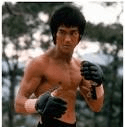
The Most Important Advice I Ever Got From Bruce Lee

Bruce Lee
Bruce Lee

Even if you’re not into martial arts, you’ve probably heard of
Bruce Lee. He is, hands down, the best-known martial artist, and
martial arts movie star, in the world.

Perhaps, for younger generations, Jackie Chan or Jet Li are more
famous. I’m not sure. But I doubt it.

A few years ago, I read an interview with the editor of Black Belt
magazine, one of the longest running periodicals covering the
martial arts space. Anytime they published an issue with Bruce Lee
on the cover, the editor said, they saw their sales increase by
at least 300%.

Even today, Bruce Lee still pulls.

It’s funny, but…even though I have loved his movies, books
written by and about him, and articles written about him….over
the years, I would say the “Bruce Lee Fighting Method” series of
books (published shortly after his untimely death in 1973) have
been my favorites – and have had the most impact on my own martial
arts career, as well as my overall approach to fitness and health.

I read those books so many times, they were starting to fall apart.

Lord knows where they are today. I think maybe my parents dumped
them, along with some other “stuff” I would have preferred to keep,
when I was away at college and they were trying to clear out the
house in preparation for moving.

Anyways, I followed Bruce’s advice in the books and developed my
own approach to training. (This was when I was younger and my
mom wouldn’t yet let me train formally in the martial arts. So I
was stuck figuring out things for myself.)

I recall rigging up our basement with punching pads and targets,
plus a weak version of a heavy bag made out of a canvas rucksack,
some sand and some padding. (That thing was rough on the knuckles.)

I drilled, stepped, kicked and punched. And I incorporated
other techniques and training concepts from the karate books I
had.

However, I also did something else in my training – something
extremely important.

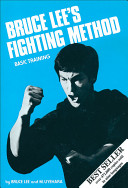
Within the “Bruce Lee Fighting Method” series, the second book –
the one with the blue cover, for those of you who may be familiar
with these books – was titled “Basic Training”.

Cover of Bruce Lee Fighting Method, Vol 2
Bruce Lee Fighting Method, Vol 2: Basic Training

Basically, Bruce’s point throughout this volume was that just
practicing your art or sport is not enough. You also need to
do supplementary training to get your body in optimal shape –
to help you be better at your chosen activity, as well as help
you avoid injuries.

“One of the most neglected elements of martial artists is the
physical workout. Too much time is spent on developing skill in
techniques and not enough in physical participation.”

He railed about many of the martial artists he had seen in his
travels, guys (and some gals I imagine) who were grossly out
of shape, but claiming to be martial arts experts.

His concern was, what if one of these “experts” got into a
real situation? Would they have the stamina and power to get
out of the scrape?

If not, could they really be called martial artists?

Now, not everyone who practices martial arts does so solely
to become a better fighter or for self defense purposes.

This may be an aspect or motivation for training. But in my
experience, for most people it’s only one of several reasons
for taking up the practice of martial arts.

However, I think that a serious student should be aware of
the need for self defense, and should therefore devote some
energy and time into body conditioning and sparring –
including some hard sparring once in awhile.

Here’s another thing. I can recall coming up in the ranks
and being disgusted by some of the black belts at the school
where I trained.

These were people who trained and did what they needed to do
to pass the black belt test….then stopped training. They
would come into the training hall once in awhile, strap on
their black belt, and parade around.

They might go through a few forms or basics. They would butt
into other peoples’ training and offer unsolicited advice.
Then they would change and leave. Without needing a shower,
mind you, because they had hardly broken a sweat.

Not exactly a good role model for us junior students!

Plus, they had totally missed the fact that earning your black
belt is just the beginning. There is so much more to learn and
improve upon beyond it!

Bruce Lee’s advice is just as important today as it ever was.

Here’s where I see it needed most:

Many of the recommendations for exercise from the “powers
that be” emphasize moderate physical activity, three to
four times per week.

As I mentioned in an earlier message, this is a good starting
point. It helps to get people going. But it’s certainly not
sufficient for reaching the higher levels of fitness and robust
health that many of us desire.

Anyways, these recommendations also – sensibly – suggest
that people pick up a sport or activity they enjoy, so they
will be more likely to continue the activity.

I agree with this. I know for sure that my love of martial
arts, wanting to get better and excel at them, enjoying
teaching and coaching others, and just plain enjoying the
process of training, helped me stay in active, high level
training for a good number of years.

There were many days when I probably would have blown off
a regular workout, like going to the gym…but decided to do
just a little martial arts training. Maybe a few forms, a few
basics, something to get me moving a little and then call it
a day.

However, more times than not, my planned short, light “workout”
would morph into an excellent training session. An hour or so
later, I would wrap it up and feel awesome!

However, just doing your chosen activity is not always
sufficient.

Here’s Bruce Lee again:

“Practicing your skill is important, but so is maintaining
your overall physical condition….Proper training is for the
purpose of building your body and avoiding activities or
substances that will deteriorate or injure it.”

Remember that it’s very important to supplement the activity
you enjoy with basic fitness training. Train for endurance,
train for power, train for speed, train for flexibility.

Just as important: train to help prevent injuries.

This is really critical, especially as you get older.

Another important byproduct: you’ll feel better, move better,
perform better…..which means you will enjoy your chosen
activity even more.

If you’re wondering how best to get started with a fitness
program, or if you’re engaged in an activity but not sure how
best to approach this type of supplementary training, then
I’ve got a great resource for you.

It’s my new special report, “Ten Universal Strategies for
Optimal Fitness
“.

This report is an easy-to-read, easy-to-apply distillation of
my many years of learning, experimenting, failing and succeeding
in the areas of enhancing fitness and health.

I cover – in a very concise and hard-hitting way – the most
important elements of a rational, efficient, and effective
approach to getting fitter and feeling healthier than you
ever imagined.

If you’re just starting out and getting back into shape, or
perhaps beginning an exercise program for the first time, this
report will point you in the right direction and show you
exactly what to do to get maximum results.

If you’re already exercising and in pretty good shape, the
information in this report will help you take your fitness
program and results to the next level.

These strategies are universal. They are time-tested. They will
work for you, no matter what your current level of fitness is
today. And they will help you get results, fast.

Copies have been flying out of here. THank you to those who
have already ordered their report.

To claim your copy today, click HERE. This will take you
directly to the order page.

Fill in your info and I’ll mail you your special report. (Yes,
this is an actual printed report, not a download). I’ve had
a limited run printed and am offering it for only $19.95 while
copies last. And the shipping & handling is on me!

In addition, if you order today, I’ll also include one of
my most popular special reports, “The Five Most Critical
Mistakes People Make When Beginning an Exercise Program – and
How to Avoid Them”. You’ll receive this one in printed form too.

Superior health and vigor are within your grasp – no matter
what your age or current condition! Let me show you how.

Order “Ten Universal Strategies for
Optimal Fitness
“.
today!

It’s never too late…you’re never too out of shape…you’re
never too old, or too busy, or too whatever….to begin today
to get in great shape, and to reclaim the health and energy
of both body and mind that you deserve.

You Can Do It!

Karen

“Transform Body Mind and Spirit with Dynamic Energy Exercise!”
http://www.BestBreathingExercises.com

Copyright, Karen Van Ness, 2014

Latest Lessons from Star Trek, Part 1

We’ve been on an “oldies” binge here at the Van Ness residence.

We don’t watch that much TV here. But lately, we’ve been watching some big time Star Trek.

It started when my son Miguel asked to watch the two new Star Trek movies which we have on DVD. We went to see them at the movies when they first came out…and loved them! So of course I grabbed the DVD of each movie as soon as they became available.

Yes, I know, DVDs are so “yesterday” with all the streaming and cloud content options we have these days. But you know what? I LIKE having the physical version of something. I like books, CDs, DVDs — especially for stuff I know I will view or read over and over again.

Like Star Trek!

Star Trek

Miguel moved from the new movies to one of the original series movies, “The Wrath of Khan”. Wow! Ricardo Montalban plays that “bad guy” role to the hilt, doesn’t he? I love how Kirk has to surrender to buy time…then he and the crew come up with a great trick to outwit Khan. I also love how Sulu comes in to help save the day.

OK sorry if you’re not a Trek fan! I’ll get to the point here.

As we watched the new Star Trek movies (plus Wrath of Khan) with my son, we realized we kept referencing the original Star Trek series from the 1960s. So we decided Miguel needs to start watching the original Star Trek, so he can see the key players when they were young, understand more of the back story, and just plain ol’ enjoy the adventures and the stories.

I’m happy to report, after watching just the first three episodes, Miguel is hooked! I think we have ourselves a new lifelong Trekkie.

As we have been watching these old shows – which were “old” when we watched them as re-runs on TV after school – we’ve also remembered some of the old commercials that used to run.

A few that come to mind – and have relevance to my recent discussion about how exercise can help keep us young and healthy, in body and mind – include:

-Remember the old 7-Eleven song they used to sing on their commercials? “Oh thank heaven for 7-Eleven!” As one of the longest-lived convenience store chains in the world, I salute their longevity and brilliance.

However, from a health standpoint, I can’t think of anything that screams “impulse eating” than 7-Eleven.

Even though they have added some “healthy” items to their offerings, such as protein bars and drinks, fruit, and so forth, they still pretty much offer the type of stuff you buy on impulse – when your energy levels, mood and/or willpower might be low, and you succumb to the Snickers bar, 32 oz soda, or Giant hot dog from hell.

Yummy!

The issue here, of course, is how our impulses can so often pull us off course when we are trying to follow a healthy nutrition and exercise program.

-Here’s another one:

“Plop plop, fizz fizz, Oh what a relief it is!”

Name that product.

You got it, it’s Alka Seltzer.

Their product is about trying to fix something after it’s gone wrong. For example, after you’ve eaten the giant hot dog from 7-Eleven and maybe washed it down with a six-pack of your favorite cold adult beverage.

The issue highlighted here is how we often let things get so bad – as in getting out of shape, or manifesting other health problems due to our poor lifestyle – which could have been prevented.

But now we are forced into extreme measures, including taking medicines, going on draconian diets, or other interventions which are less than pleasant.

-One last one:

Remember the old Castrol commercials? For a long time, all their messaging centered around one basic idea:

“You can spend a few dollars now to change your car’s oil, or you could spend a few thousand dollars later to change your engine.”

This gets to the heart of prevention. I experienced this message firsthand as a child, when I “helped” my dad change the oil in our cars. (This was back in the day when you could do car repairs and maintenance without needing a supercomputer.) My dad  stressed the importance of proper maintenance, of taking good care of what you had, whether it was your car, your house and yard, or your toys.

Of course, we all know we need to take better care of ourselves.

Unfortunately, we usually pay attention to what needs fixing, or what has cropped up as an urgent problem, when it’s too late. The damage has already been done.

Prevention doesn’t sell.

But that doesn’t mean it’s too late!

It’s never too late…you’re never too out of shape…you’re never too old, or too busy, or too whatever….to begin today to get in great shape, and to reclaim the health and energy of both body and mind that you deserve.

I’ve been writing a lot about how regular exercise and maintaining at least a base level of fitness can help keep your body young and healthy.

But you’ve got to be smart about it!

If you’re going to success this time, and “finally” get in great shape, feel better, think better, be confident again… then you’ll need an approach that gets great results in an efficient way.

I share this approach – and more – in my new special report, “Ten Universal Strategies for Optimal Fitness“.

This report is an easy-to-read, easy-to-apply distillation of my many years of learning, experimenting, failing and succeeding in the areas of enhancing fitness and health.

I cover – in a very concise and hard-hitting way – the most important elements  of a rational, efficient, and effective approach to getting fitter and feeling healthier than you ever imagined.

If you’re just starting out and getting back into shape, or perhaps beginning an exercise program for the first time, this report will point you in the right direction and show you exactly what to do to get maximum results.

If you’re already exercising and in pretty good shape, the information in this report will help you take your fitness program and results to the next level.

These strategies are universal. They are time-tested. They will work for you, no matter what your current level of fitness is today. And they will help you get results, fast.

To claim your copy today, click HERE. This will take you directly to the order page. Fill in your info and I’ll mail you your special report. (Yes, this is an actual printed report, not a download). I’ve had a limited run printed and am offering it for only $19.95 while copies last. And the shipping & handling is on me!

In addition, if you order today, I’ll also include one of my most popular special reports, “The Five Most Critical Mistakes People Make When Beginning an Exercise Program – and How to Avoid Them”. You’ll receive this one in printed form too.

Superior health and vigor are within your grasp – no matter what your age or current condition! Let me show you how.

Order “Ten Universal Strategies for Optimal Fitness” today!

You Can Do It!

Karen

“Transform Body Mind and Spirit with Dynamic Energy Exercise!” http://www.BestBreathingExercises.com

Copyright, Karen Van Ness, 2014