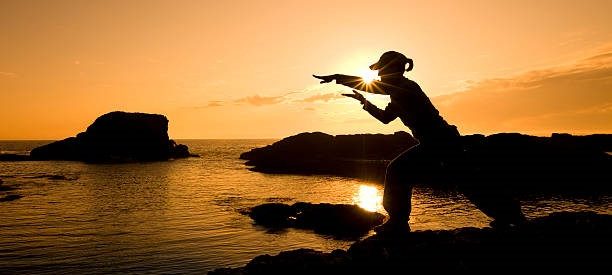
Relaxation and Power: Make It Work For You

In any athletic endeavour, you must first learn how to relax before you can develop optimal power.

When you try to move faster, or hit harder, by excessive effort, you actually sabotage your efforts and move more slowly. You also move less efficiently, so you tire more quickly.

The same holds for academic or work-related activities.

When you try too hard to concentrate or focus, you may find your mind actually wanders more than usual. And you find the task at hand more difficult to do, meaning you tire of it more quickly.

On the other hand, when you first relax, and tell yourself that your project or task will be fun – or that at least it will be satisfying to complete and get over with – you find yourself becoming immersed in the project. You effortlessly concentrate. You lose track of time. And, before you know it, you have finished it.

Time to kick back and have a cold one!

Well, guess what. This natural paradigm of effective performance applies to the most elemental activity you perform every second of every day: your breathing.

And putting this principle to work, along with some focused attention on your breathing, can help you harness the most fundamental source of power in your body.

When you first begin to work on your breathing, you should focus on learning how to breathe more completely. Ironically, you don’t breathe more fully and completely by trying harder. You actually breathe better when you are relaxed.

You open up your breathing by loosening the structures that support healthy breathing, and learning how to relax through deep breathing. This is the heart of the Secret Power of Dynamic Energy Exercise Course, Volume I: Invigorate and Rejuvenate.

Just a few minutes of these types of exercises will have you relaxed yet focused, calm yet full of quiet energy. They’re great to do at the end of the day, or any time you need a little de-stressing or a pick-me-up.

Once you have learned the elements of complete breathing, and how to breathe in a relaxed manner, your next step is to increase your lung capacity and power, as well as strengthen your torso area – the area of the body that supports breathing, posture and a healthy spine.

By combining breathing techniques with certain types of movement, you are able to enhance internal energy and lung power, while at the same time strengthening your core muscles.

You also have to focus while doing these types of exercises. So they are wonderful at helping improve your concentration and ability to focus and get things done throughout the day.

These are the exercises that make up the Dynamic Energy Routine, which is in the Secret Power of Dynamic Energy Exercise Course, Volume 2.

If you haven’t already, be sure to check these programs out. I’m positive you can benefit from these wonderful exercises.

You Can Do It!


“Best Breathing Exercises: Transform Body Mind and Spirit with Dynamic Energy Exercise!”

http://www.BestBreathingExercises.com

Copyright, Karen Van Ness, 2012

The Power of Being In the Moment

There is a concept in traditional martial arts called “beginner’s mind”. The Japanese word for this is “soshin”.

As a beginner, the first time you do something you really have to concentrate and focus in order to do it correctly.

The idea of soshin is to continue to be like a beginner when p erforming various tasks. No matter how trivial a task is, retain the mindfulness of a beginner when performing it.

Have you ever engaged in some kind of creative work, or have you ever become so engrossed in doing something, like playing and laughing with your kids, that you lost all track of time?

This happened because you were living in the moment. You truly felt more alive and energized by doing it.

It’s an incredible feeling, almost a state of flow.

This is one of the things I love about the martial arts…and one of the reasons I highly recommend it for kids and adults.

During hard training, you have to concentrate 100% on the instructor’s commands and on your movements. When sparring or fighting, you have to be totally focused on your opponent and your own strategy and tactics.

During these times, I lose all sense of obligations and responsibilites outside of the training hall.

I stop worrying about what needs to get done, or the latest problem or issue. Although these things await me, for the moment I can just …. be. And enjoy!

Performing conscious breathing, or other types of breathing exercises, can help you create these moments of presence.

When you focus on your breathing and on how your body feels in response to the breathing, you are in the moment.

And at least for this moment, you forget about responsibilities, issues, and demands.

You stop dwelling on health problems or aches and pains. And you help yourself to relax and feel calmer, more centered, and more in control…regardless of what is going on around you.

Breathing exercises and being in the moment are not instant cures for all that ails you. But awareness of your breathing and of the present moment can help you lead a calmer, more relaxed and healthier life. It can imbue everything you do with more power.

I encourage you to put these concepts to work by making them a regular part of your life.

You Can Do It!


“Best Breathing Exercises: Transform Body Mind and Spirit with Dynamic Energy Exercise!”

http://www.BestBreathingExercises.comcom

P.S. Discover how you can use your breathing to enter a state of effortless flow and power with the Secret Power of Dynamic Energy Exercise Course Volume 1: Invigorate and Rejuvenate. The movements coupled with complete breathing will invigorate, rejuvenate and relax your body, mind and spirit. Pick up your own program CD’s at the Best Breathing Exercises website.

Copyright, Karen Van Ness, 2012

Three Steps to Breathing – and Living! – On Purpose

If you want to live bigger and better, with more energy and enthusiasm, vim and vigor, all you need to do is…breathe.

Your breathing practice can be as simple as 10 deep, complete breaths in the morning when you first wake up.

If you integrate conscious, focused breathing with your physical exercise, you are furthering your mastery of your breathing…AND transforming your exercise sessions into something a whole lot more powerful and beneficial.

And, if you invest a little time in learning various types of breathing techniques, you will have a tool and a resource you can use to enhance your health, improve your stamina and power, and increase your mental focus and clarity.

Unfortunately, most people don’t even bother with the first step: doing some deep breathing every day.

An even smaller percentage get to steps 2 and 3.

You may think you don’t have the time to learn such things. Or you may be concerned that, in order to correctly perform breathing exercises, you have to be at a certain level of physical fitness.

Perhaps you’re worried you will have to twist your body into contorted positions or chant or something.

I’m not making this up! These are objections I have actually heard from people.

This is part of what motivated me to make proper breathing instruction and breathing exercises more accessible to people, including those who may not be interested in doing yoga or learning chi kung or tai chi, but would still like the benefits of such practices.

A lot of information on breathing and energy practices make it all seem so esoteric and so mysterious that you need a degree in Chinese medicine, or advanced abilities as a yogi, to fully understand and benefit.

Not so!

The first, very accessible step, is to learn a few basic techniques.

Then apply your breathing skills to every day situations, such as: exercising; sitting in traffic; sitting in a boring meeting; relaxing and calming yourself before bedtime.

Here’s an excellent question from a Dear Reader:

Hey Karen,

I faithfully practice outside every morning. I’m a very recently retired Personal Trainer, but proper breathing is something I’ve ignored over the years, other than when a client was lifting a weight. My question is – When I inhale, how long do I hold the breath? Or is it simply, like yoga, as long as I’m feeling comfortable?

I want to thank you for the updates. They really help.

Al

KVN: Thanks for your question, Al. And great to hear that you do your exercises outside every morning. It’s a great way to start the day, isn’t it?

Now, in answer to your question: it depends.

It depends on your purpose for the breathing exercises you are doing.

At a very basic level, breathing techniques can be grouped into ones that help open up and relax your breathing spaces, and help you get grounded and centered.

Other techniques help to balance your breathing. Still others are used to increase breath control, lung power, and the generation of power, such as techniques used to increase power and speed in the martial arts.

You can find a rational, effective progression of these types of breathing exercises and techniques in the Secret Power of Dynamic Energy Exercise Course, Volumes 1 and 2. (And you can take advantage of a special price and extra bonus when you order both programs together. For details, please go to the Dynamic Energy Exercise Course page.)

When you hold your breath for longer than 4 to 8 seconds, you are using breath retention techniques.

Hindu and Taoist masters developed breath locks, or “bandas” to help improve their ability to retain their breath for longer and longer periods of time.

This was done, in part, as a meditative aid.

Breath retention techniques are also used to help develop breath control and internal power. These types of techniques are practiced in traditional martial arts to develop maximum power and focus in the practitioners’ strikes and kicks, as well as make the practitioner more resistant – or even impervious – to blows from their opponent.

For your own breath practice, you should perform most breathing techniques as Al described: be comfortable in your breathing.

This means getting into and maintaining a rhythm of inhalation and exhalation, and letting the pauses between the inhale and exhale occur naturally.

The main thing is to balance your inhalation and exhalation.

For example, an excellent rhythm that works well for most people is 4:2:4:2. In other words, inhale for 4, hold for 2, exhale for 4, hold for 2.

You can do multiples of these to extend your breathing. So, you could inhale for 8, hold for 4, exhale for 8, hold for 4. You get the picture.

If your goal is to develop better breath control, you can add breath retention exercises into the mix. Generally speaking, you should do some balanced breathing first, as a warm up.

Then move into breath holding, performing 5 to 10 repetitions of each exercise.

Here, you should push yourself a little bit. Not to the point that you are gasping for air when you finally breathe. But gradually, over time, extend your hold on the inhale or exhale.

For an excellent workout, add dynamic tension to your breath holding, as well as exhalations against resistance. You will work up a sweat in no time!

You Can Do It!


“Best Breathing Exercises: Transform Body Mind and Spirit with Dynamic Energy Exercise!” http://www.BestBreathingExercises.com

Copyright, Karen Van Ness, 2012

What Can Doing Your Taxes Teach You About Better Fitness?

Well, tomorrow is one of the least favorite days for American taxpayers.

It’s the final day to submit your tax returns without incurring a penalty – unless you have already filed for an extension. And even if you get an extension, you still have to pay what you THINK you owe by tomorrow…or be hit with another penalty.

I was reminded of tax day during this morning’s trip to our local post office. I dropped off some orders I was shipping to customers, nd couldn’t help but notice that the line at the counter was longer than normal.

When I lived in Northern Virginia, I used to ship my orders from the Merrifield Regional post office. This post office was -and is – featured on the local, and sometimes even national, news every year on tax day. It’s incredible to see people in a long traffic jam, using the improvised drive-through that the post office sets up. It beats trying to get inside, where it’s wall-to-wall people.

The post office stays open until midnight, for those brave people who wait until the ultimate last minute to do their taxes.

I’ve never understood this obsession with waiting until the last minute to mail in your taxes. Some people do it deliberately, and with pride, every year…year after year.

I guess it’s their way of “stickin’ it to the man”, not giving up a blessed cent, nor filling out those dastardly forms, until the last possible moment.

The annual tax deadline is instructive. It demonstrates how much more efficient you can be when you have a deadline — either self-imposed or mandated from some external force, such as the long arm of the tax man.

For example, I usually complete my taxes by the end of February or early March.

Because preparing taxes is such a tedious process, I break down  the overall task into smaller steps: gather the statements and records I need; organize everything; complete the P&L statement and document deductions; complete the returns on Turbotax; file everything away.

Doing this in steps involved a little time each day over a period of a week or so. Not a terrible process – but not terribly efficient, either.

This year, however, I procrastinated…and had to complete my taxes this weekend. With my back against the wall, I cranked through the record gathering, organization, calculations and statements, and completed and filed my tax returns within about three hours.Plus I also cleaned out old records and reorganized files and folders so I am better organized for the coming year.

What had taken me a week or more to get done in previous years…I completed in only a few hours this year.

Talk about the power of a deadline!

The deadline is a powerful tool to apply to any important action you want to take – or know you should take – to improve your life or your health.

As an example, you may be good about working out on a regular basis.

But you may begin your workout without a plan as to what you are going to do, and how long your workout is going to last. So you may dawdle and do less effective exercises. You may not reach the level of intensity you need to, for long enough, to propel yourself forward toward your fitness and health goals.

As an alternative, even if you have all the time in the world for your next workout (is that true of anyone anymore?), try setting a time limit for yourself.

Set a deadline of one hour from now and get going.

You’ll immediately notice a significant change in your approach. You’ll be forced to plan what you are going to do, and for how long.

You may budget 10 minutes for warming up, then move into a more intense cardio workout for 20 minutes. Then you will spend 20 minutes on strength training, followed by 10 minutes to cool down and stretch.

Of course, you can train in such a way as to combine these separate activities as well. A lot of that is driven by your breathing, and with the level of intensity you bring to each activity and exercise. This approach is what I teach in the Best Breathing Exercises programs.

With a deadline-driven approach, you don’t have time to dawdle or dilly-dally. You automatically move from exercise to exercise with more efficiency. You focus better, and you get more done in one hour than you might have achieved in two hours during your “old” way of working out.

This approach offers an outstanding way to increase the quality, intensity – and results – of your fitness program, or any other endeavor that is important to you.

You Can Do It!


“Best Breathing Exercises: Transform Body Mind and Spirit with Dynamic Energy Exercise!” http://www.BestBreathingExercises.com

P.S. The great copywriter, John Carlton, is fond of saying, “The deadline is mankind’s greatest invention – because without it, nothing would ever get done!” Use this powerful tool in your own life and see how much more focused and productive you become.

Copyright, Karen Van Ness, 2012

The Best Time and Place to Exercise

Is there a best time of the day to do your deep breathing and dynamic exercises?

As far as I am concerned, any time is a great time to allow yourself the luxury of a few deep, relaxed breaths.

Taking little “micro-breaks” of 5 to 10 deep breaths throughout the day is a great way to re-charge and re-focus yourself during a busy day. Or a boring day, for that matter.

When it comes to developing a daily habit or routine, though, I think it is immensely helpful to schedule your breathing or other exercise at the same time every day.

This allows your body and brain to become programmed to expect the exercise. Which helps you become more consistent and regular.

I highly recommend doing your deep breathing exercises first thing in the morning, after arising.

In the Dynamic Energy Routine in the Secret Power of Dynamic Energy Exercise Course, Volume II  I actually call the first series of exercises, “Greet the Day”. Because that is exactly what you are doing.

You face east, toward the rising sun, and soak up the sun’s brilliance, energy, and the promise of a new day. This mental component, combined with the breathing and movements, is guaranteed to have you energized and rarin’ to go in just minutes.

Better yet, whenever possible, try to do your breathing exercises outdoors, in the fresh air. Getting close to nature adds a dimension that helps you benefit even more from your practice.

It also carries you closer to that spiritual or divine part in each of us. You are humbled by nature’s beauty…yet at the same time elevated, because you are part of it too. 

Well, I know you are already off and running today. Be sure to give yourself the gift of a few minutes of deep breathing and relaxation today. 

You Can Do It!

Karen

“Best Breathing Exercises: Transform Body Mind and Spirit with Dynamic Energy Exercise!” http://www.BestBreathingExercises.com

P.S. Deep breathing and inner awareness are important tools that can transform your attitude and energy and enable you to move more joyfully and powerfully through each day.

I highly encourage you to begin a morning routine of deep breathing. Better yet, put some of the dynamic energy exercises I teach to work, such as those in the Secret Power of Dynamic Energy Exercise Course, Volume II. Pick up your copy today at  the Best Breathing Exercises website.

Copyright, Karen Van Ness, 2012

Two Keys To Healthy Breathing

If you want to improve the functioning of your lungs and your ability to pull in more life-giving, energy-stoking oxygen, you need to focus on two major areas.

The first is to develop the muscles that support proper, healthy breathing.

The lungs have no muscles of their own. Their expansion and contraction are completely dependent on the muscles surrounding the rib cage and the diaphragm. So you need to build up the strength and coordination of the structures that support proper, full breathing.

The second major area that affects your breathing has to do with what goes on inside your lungs. This includes your vital capacity and the residual air that remains in your lungs when breathing.

The size of the lungs varies from person to person. But generally speaking, each of your lungs is about the size of a football.

Isn’t that funny? The first time I heard that, I thought “My lungs aren’t that small!” A football just doesn’t seem that big to me.

Anyhoo, a large person will naturally have larger lungs than a smaller person. Men generally have larger lungs than women.

So there are some natural limits to lung capacity.

However, you should be more concerned with how much of the total capacity of your lungs you can actually use. This usable portion is called your vital capacity.

A well conditioned person’s vital capacity is about 75 percent of his or her total capacity.

When you exhale, you breathe out all of the air you can from your lungs. The remaining air is called the residual volume. This is air that remains fixed in your lungs. You may have heard it referred to as “stale air”.

Too much residual volume is unhealthy. If you are inactive for any length of time, or you have a respiratory condition that is not well-controlled, the unusable portion of your lungs may increase.

This physically blocks off more and more of your airways, which leaves less space for normal breathing – and makes it even more difficult to breathe when exerting yourself.

You may get to the point that just climbing a flight of stairs leaves you breathless.

Unless you do something, this breathlessness and chest tightness will keep getting worse and worse.

These two key areas – developing the structures that support proper, healthy breathing and improving your vital capacity – are the same areas we work on with the dynamic energy exercises I teach. I’ve been doing these exercises myself as I work through a relatively sendentary period while my knee heals.

Even though I can’t put weight on the operated leg yet, and therefore am unable to do a more “traditional” work out, I can still get myself huffing and puffing and working up a sweat….with some simple, ancient, time-tested dynamic breathing exercises.

Now, a good fitness program can help you improve your ability to breathe, build your vital capacity, and reduce the residual volume.

However, many people do not breathe correctly when they exercise. Typically we are nottaught how to breathe to maximize the results we get from exercise.

Doing some additional breathing work, such as the exercises in the Secret Power of Dynamic Energy Exercise Course, Volume 2: The Dynamic Energy Routine – is a surefire way to target, develop and maximize the work performed by your lungs, as well as the structures that support proper breathing.

If you’re serious about improving your physical condition and your health, you should make it a point to focus on expanding your vital capacity and ability to breathe properly.

This type of dynamic breathing exercise will help you get fit more quickly. And it provides the foundation for robust health and longevity.

AND – key point – it makes you feel great!

You Can Do It!

Karen

“Best Breathing Exercises: Transform Body Mind and Spirit with Dynamic Energy Exercise!” http://www.BestBreathingExercises.com

P.S. If you’re interested in developing your breathing ability, enhancing your health and rocketlaunching your energy levels, then you owe it to yourself to take a few minutes to learn more about the Dynamic Energy Routine – part of the Secret Power of Dynamic Energy Exercise Course, Volume 2. For more information, or to order your own copy of the program manual and DVD, go to the Best Breathing Exercises website.

Copyright, Karen Van Ness, 2012

Harness The Force of Frustration

When it comes to your fitness and health, you’d probably say that they are important to you.

Yet how committed and consistent are you at taking action in these two areas, each and every day?

Since I’ve been laid up after surgery and quite limited in the type of exercise I can do right now, I’ve been giving the concept of frustration a whole lot of thought. To say I’m feeling frustrated at times is an understatement.

I’m used to moving a lot, doing something every single day for my health and fitness, using physical activity and expression as a key outlet for the stress that builds up from a busy, engaged life. I’ve had to re-focus my usual activities to ones I can support now.It hasn’t been easy, but I’m beginning to get into a groove that supports and energizes me.

But let’s get back to you….

It takes a lot to make significant changes in your lifestyle, your schedule, and your attitude and outlook…changes that will propel you towards greater things in your life.

It’s a lot more comfortable to stay where you are, with what you know, and dream about “If only…”

If only I were thinner. If only I could put on more muscle. If only I could get control of this stress and anxiety and live in a more relaxed manner. And so forth…

Seeing the need to change, thinking you ought to change, even wanting to change are all good. But they don’t quite get it done when it comes to actually taking the consistent, sustained action that will enable you to reach your goals.

No, it takes something much stronger. And that something is… frustration.

Yes, that negative, nasty emotion. But it’s true, something very negative can help you make positive changes.

I used to abhor frustration. I hated the feeling. I think frustration and boredom are the two states I seek to avoid the most.

However, I realized from my own experience, as well as working with others, that you’re not reallly ready to do the things and think the thoughts you need to, until you are at the end of your rope and ready and willing to do what it takes to get out of the situation you are in.

If, for example, you get to the point that you are really frustrated with your anxiety and levels of stress, and the fact that you don’t seem to be improving…Or you are frustrated with your appearance and inability to lose the weight…then celebrate.

Get happy! Put your hands in the air and shout “Hur-rah!”

I’m serious. Because when you get truly frustrated, you are ready for a breakthrough.

You are at the point where you begin to ask yourself the right questions, and look for the information or resources that can help you.

So leverage the frustration you may be feeling and use it to help energize and support your efforts to change or improve.

Here’s one more thought on frustration: it can also trip you up.

Once you are on the path to losing weight, or gaining the upper hand on stress…you may at times experience little or no progress.

You may get frustrated at how slowly things are changing. Or you may get frustrated at yourself for slipping up or backsliding. You may think you’ll never reach your goals.

Well, once again, use this frustration as a tool to energize yourself. Don’t let it put you into a funk, or get so down that you give up.

Here’s a great quote I heard a long time ago, that helps describe this point:

“How long would you give the average baby to learn how to walk before you didn’t let him or her try anymore?”

That’s a crazy question, isn’t it? You’ll give your kid as long as it takes, and all the love and support to help them. But dadgummit, that kid is going to learn how to walk!

And think how frustrated babies and toddlers can be at times, when they are trying to master a new motor skill. But they keep at it, again and again and again, until they finally get it.

Why not apply this same approach to yourself?

You Can Do It!

Karen

“Best Breathing Exercises: Transform Body Mind and Spirit with Dynamic Energy Exercise!” http://www.BestBreathingExercises.com

P.S. I’d love to help as you leverage your frustration into action, and seek the information that will help you take smarter steps towards your fitness and health goals. Visit the Best Breathing Exercises website for information on the products and programs that can help you transform your health and energy levels.

Copyright, Karen Van Ness, 2012

Why Goals Are Not That Important

I trust you have begun 2012 in fine form.

If you’re like me, you have probably been inundated with emails, articles and other such talk about setting resolutions and goals for yourself.

I’m a huge proponent of setting and working towards meaningful goals.

But I have to admit one thing:

Goals in and of themselves are not the most important thing.

What IS important is the person you become in the process of achieving your goals.

In order to achieve more, you need to become more.What you become determines what you can achieve and realize in your life. What you become is just as important as what you do.

The real reason to set, work towards and achieve goals is your own personal growth. Growth that helps you create a better life for yourself…and have a more positive and profound impact on the people around you. Growth that helps you make a difference in your world, your community, within your circle of family and friends. Growth that is in alignment with your highest personal values and vision for your life.

Here’s the exciting thing about having a goal:

When you focus on a goal, you immediately begin improving because you have become aware of a new and exciting direction in which to take your life.

You’re already mentally and emotionally shifting in that direction.

As you think about what you would like to achieve, do, or bring into your life this coming year….think also about the type of person you will have to become in order to realize your goals.

For example, some years ago, when I set out to overcome a serious and chronic health problem – a severe case of asthma – I not only thought about the obvious goals, like reducing or eliminating the asthma attacks, or breathing more clearly, or getting off all the darn meds.

What really motivated me was picturing the kind of person I would be if I were free from asthma.

I thought about how great it would be to lose the fatigue and anxiety, to have abundant energy and confidence. To be able to participate fullbore in just about any activity I wanted to – without fear.

You may face your own health or fitness challenge. Have you set a goal and made the commitment to begin overcoming that challenge?

If so, keep in mind the transformative power of deep breathing and dynamic energy exercise

No matter what your goal is – losing weight, improving stamina, transforming stress into positive energy, becoming more flexible and open in body and mind – you can get started more quickly and easily if you put one of the Best Breathing Exercises programs to work for you.

It’s not magic, and you have to make some effort. But remember this:   “The highest reward for a person’s toil is not what they get by it, but what they become by it.”

You Can Do It!

Karen

“Best Breathing Exercises: Transform Body Mind and Spirit with Dynamic Energy Exercise!” http://www.BestBreathingExercises.com

P.S. If your goals for 2012 include getting more fit…breathing more clearly..>overcoming stress and anxiety….or feeling more energetic and healthy, then you owe it to yourself to check out the Best Breathing Exercises programs.

Let me help you make 2012 your healthiest year ever!

Copyright, Karen Van Ness, 2012

How To Get Off To A Great Start to 2012

Happy New Year!

As you move into 2012, I’m sure you’ve given some thought to the changes or improvements you’d like to make in various areas.

I know I am. I’ve drafted and re-drafted and refined my list of goals for this year. And I’m already working on some stuff today to help me move towards some key goals. So I feel pretty good!

Did you know that the three areas people think about the most when it come to setting goals (according to surveys) are: relationships, health, and money. So I imagine these areas are important to you too.

My tips and programs don’t help directly with the areas of relationships or money. But I believe that improving your health and energy levels has a direct and dramatic impact on how successful you are in all areas of your life.

And those are two areas I CAN help you with!

Now, this is not a message about making resolutions. As you know (if you’ve been reading), I don’t believe in resolutions. I am, however, a huge believer in having an overall vision for your life and setting short-term to long-term goals towards that vision. I have experienced enormous benefit in my own life from setting, planning for and working towards specific goals I have set for myself.

So…I’d like to suggest that you formulate some goals pertaining to your health, energy levels and fitness.

What really resonates with you? Is it to lose weight? Is it to enjoy higher energy levels so you feel better and get more done? Is it to improve your fitness and mobility so you can play with your kids, or run in that 5K or 10K you’ve been wanting to do? Is it to fit into those old jeans?

Make sure you focus on a goal or goals that are important to YOU.

To help you, here are some areas to consider:

(1) Learning and applying basic stress management and coping techniques, including targeted visualization, deep breathing, and relaxation and stretching exercises. This helps you control your response to life’s challenges, control pain, manage stress, and achieve clear thinking and mental focus.

(2) Learning and performing on a regular basis (daily if possible) deep breathing and other dynamic exercises and techniques. This is critical to helping you gain control over your breathing, build lung power and stamina, improve the health of your digestive system and internal organs, and maximize energy.

(3) Starting, and sticking with, a rational exercise program. This helps you get into better shape, build stamina and strength, and protect you from disease. When you embark on a well-planned program, you can enjoy your workouts and favorite activities.

(4) Learn simple modifications to your diet, including some key nutritional supplements, to help improve your health and energy levels.

This year, I’ll continue to focus on these areas in these tips I send you, as well as in new programs being introduced over the course of the year. My emphasis is on making it easy (and fun!) for you to discover and leverage the power of your breath to promote better health and energy. Because, fact is, our overall health and energy is so important to success in every area of our lives.

Thank you again for reading and for being a Best Breathing Exercises “Energy, Fitness & Personal Power” newsletter subscriber. One of my favorite things to do each day is to write to you.

Here’s to your health and to an awesome 2012!

You Can Do It!

Karen

“Best Breathing Exercises: Transform Body Mind and Spirit with Dynamic Energy Exercise!” http://www.BestBreathingExercises.com

P.S. Start your New Year off right by embarking on a fitness and health adventure. Discover how deep breathing and energy exercises can improve your stamina, transform stress, and put you in touch with your inner power. Go to the Best Breathing Exercises website to learn more.

Copyright, Karen Van Ness, 2012

How To Prepare For the Best Year of Your Life

The first step in deciding what you want for the coming year is to think back over the past year….about the good things, as well as the not-so-good things, that came into your life.

Think also about what you did (or did not do) to achieve those good things, or to bring or allow in those not-so-good things.

We learn from our mistakes as well as our successes, so it’s good to spend a few minutes on each.

If you’re like most people, you are your own worst critic.

Dr. Maxwell Maltz, the famous founder of Psycho-Cybernetics, always said, “See yourself with kind eyes.”

(By the way, I highly recommend all of Dr. Maltz’s books. Try to find the original versions from the 1960s and 1970s. More recent versions of his works have been re-published by people who added their own stuff on top of Maltz’s. His original material is the best resource, from my point of view.)

“See yourself with kind eyes.” So basic, but so difficult to do sometimes.

So, I recommend you pretend you are speaking with your best friend when you inventory the past year. Just as you would with a friend, be honest, but…spend more time congratulating yourself on the good things – the things you achieved this past year. Spend less time on the not-so-good stuff.

And there ARE good things – no matter how challenging your year may have been. You might have to think a little bit, but they’re there.

The next step is to reflect on what you would like to achieve or bring into your life in 2012.

Now, I’m not talking about making New Year’s resolutions. Resolutions are for amateurs.

I’m talking about setting meaningful, exciting goals for yourself.

Humans are inherently goal-oriented. So setting, planning for, and working toward goals is a natural, powerful mechanism for moving forward in life. Goals are critical to the process of constructive change and growth.

It’s good to have balance in your goals.

In other words, look across the major areas of your life and think about the outcomes you would like to see in each of them.

As I mentioned yesterday, some key areas to consider include:

-health and fitness;

-family and relationships;

-career or business;

-financial;

-personal development;

-spiritual development;

-contribution and service.

You can have specific goals for any and every area of your life. And one of the most, if not THE most, important area is your health.

In fact, I believe that setting a goal or goals pertaining to your health and fitness is critical to having a positive and constructive year.

Here’s why: If your health or fitness is lousy, it will negatively impact every other area of your life. Your energy levels, your confidence, your belief in your ability to set and achieve goals, are all impacted by your success in establishing and following a solid health and fitness program.

If your health and fitness levels are high, you will possess the energy, confidence, and sense of well-being that literally catapult you forward to the achievement of even your most difficult goals.

The most direct way to this inner power (that you already possess) is through your breath.

Your breath is like a super highway that drives straight to your spirit, emotions and internal energy.

That’s one reason why I place such emphasis on cultivating your breath and energy as a fundamental cornerstone of your overall health and fitness program.

And the Best Breathing Exercises programs  – can help you with this. Each one teaches you how to tap into the inner power that you usually ignore or underestimate.

So…Back to setting your goals and planning the outcomes you want to manifest in your life for 2012. Here’s a great way to begin:

Pretend it’s a year from now, and you are looking back over 2012.

What kind of year will you be reviewing? What will you feel really awesome about having achieved or completed? What will you be most excited or proud of?

Usually the first few things that pop into your mind are good candidates for your major goals for the year. Because these are the things that you really want and desire.

And strong, burning desire is the master key to unlocking your internal powers and achieving your goals.

You Can Do It!

Karen

“Best Breathing Exercises: Transform Body Mind and Spirit with Dynamic Energy Exercise!” http://www.BestBreathingExercises.com

Copyright, Karen Van Ness, 2011